I Manoscritti / Original Typescripts · 8 fogli
Page 1
Page 2
Page 3
Page 4
Page 5
Page 6
Page 7
Page 8
Franco Lalli’s Il figlio di Enrico Scatena is a serialized social melodrama with elements of political thriller and murder mystery, set between small-town Springfield and New York. Enrico Scatena, an Italian immigrant who rose from poverty to wealth through construction and civic influence, dreams of turning his weekly paper, The Springfield News, into a daily and installing his only son Paolo, a Columbia journalism student, as editor—partly to keep him from being “stolen” by New York.
At a triumphal banquet Enrico delivers a vehement anti-communist speech and offers $5,000 to anyone who can identify a communist in Springfield. The prize claim detonates his life: evidence shows the communist is Paolo. Enrico, bound by honor, pays the money secretly to the parish priest, Don Carlo, but a key witness, artist John Reed, disappears and is later found shot dead near Springfield. Enrico confronts Paolo in New York; Paolo defiantly embraces communism, resenting a life already “won” by his father, and reveals the influence of Doris Mitchell, his lover. Crushed, Enrico gives away his fortune and withdraws from public life. Don Carlo travels to New York to understand Paolo and deliver a message from Sandra, Paolo’s neglected fiancée. There Doris, terrified, confesses she is a Russian spy using her art shop as a cover and is being threatened, and she seeks the priest’s counsel (the text then breaks off).
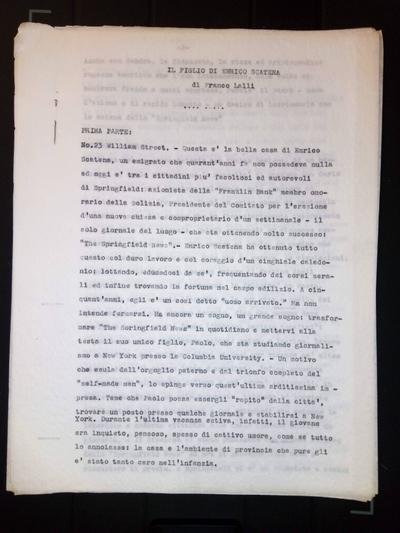
di Franco Lalli
No.23 William Street. — Questa è la bella casa di Enrico Scatena, un emigrato che quarant'anni fa non possedeva nulla ed oggi è tra i cittadini più facoltosi ed autorevoli di Springfield: azionista della "Franklin Bank" membro onorario della polizia, Presidente del Comitato per l'erezione d'una nuova chiesa e comproprietario d'un settimanale — il solo giornale del luogo — che sta ottenendo molto successo: "The Springfield News". — Enrico Scatena ha ottenuto tutto questo col duro lavoro e col coraggio d'un cinghiale caledonio: lottando, educandosi da sé, frequentando dei corsi serali ed infine trovando la fortuna nel campo edilizio. A cinquant'anni, egli è un così detto "uomo arrivato." Ma non intende fermarsi. Ha ancora un sogno, un grande sogno: trasformare "The Springfield News" in quotidiano e mettervi alla testa il suo unico figlio, Paolo, che sta studiando giornalismo a New York presso la Columbia University. — Un motivo che esula dall'orgoglio paterno e dal trionfo completo del "self-made man", lo spinge verso quest'ultima arditissima impresa. Teme che Paolo possa essergli "rapito" dalla città, trovare un posto presso qualche giornale e stabilirsi a New York. Durante l'ultima vacanza estiva, infatti, il giovane era inquieto, pensoso, spesso di cattivo umore, come se tutto lo annoiasse: la casa e l'ambiente di provincia che pure gli è stato tanto caro nell'infanzia.
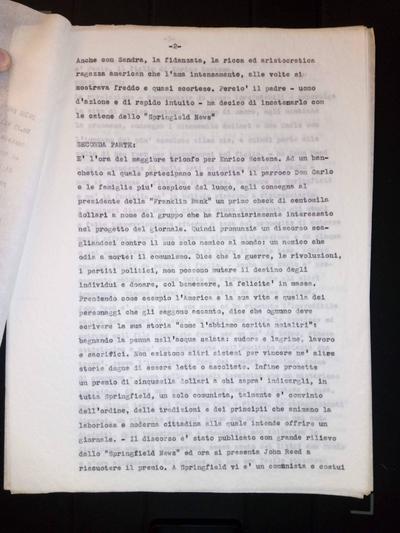
Anche con Sandra, la fidanzata, la ricca ed aristocratica ragazza americana che l'ama intensamente, alle volte si mostrava freddo e quasi scortese. Perciò il padre - uomo d'azione e di rapido intuito - ha deciso di incosternarlo con le catene dello "Springfield News".
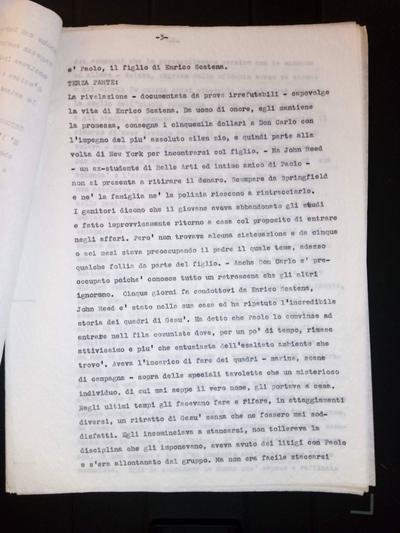
È l'ora del maggiore trionfo per Enrico Scatena. Ad un banchetto al quale partecipano le autorità, il parroco Don Carlo e le famiglie più cospicue del luogo, egli consegna al presidente della "Franklin Bank" un primo check di centomila dollari a nome del gruppo che ha finanziariamente interessato nel progetto del giornale. Quindi pronunzia un discorso scagliandosi contro il suo solo nemico al mondo: un nemico che odia a morte: il comunismo. Dice che le guerre, le rivoluzioni, i partiti politici, non possono mutare il destino degli individui e donare, col benessere, la felicità in massa. Prendendo come esempio l'America e la sua vita e quella dei personaggi che gli seggono accanto, dice che ognuno deve scrivere la sua storia "come l'abbiamo scritta noi altri": bagnando la penna nell'acqua salata: sudore e lagrime, lavoro e sacrifici. Non esistono altri sistemi per vincere né altre storie degne di essere lette o ascoltate. Infine promette un premio di cinquemila dollari a chi saprà indicargli, in tutta Springfield, un solo comunista, talmente è convinto dell'ordine, delle tradizioni e dei principii che animano la laboriosa e moderna cittadina alla quale intende offrire un giornale. - Il discorso è stato pubblicato con grande rilievo dallo "Springfield News" ed ora si presenta John Reed a riscuotere il premio. A Springfield vi è un comunista e costui è Paolo, il figlio di Enrico Scatena.
La rivelazione – documentata da prove irrefutabili – capovolge la vita di Enrico Scatena. Da uomo di onore, egli mantiene la promessa, consegna i cinquemila dollari a Don Carlo con l'impegno del più assoluto silenzio, e quindi parte alla volta di New York per incontrarsi col figlio. – Ma John Reed – un ex-studente di Belle Arti ed intimo amico di Paolo – non si presenta a ritirare il denaro. Scompare da Springfield e né la polizia né la famiglia riescono a rintracciarlo.
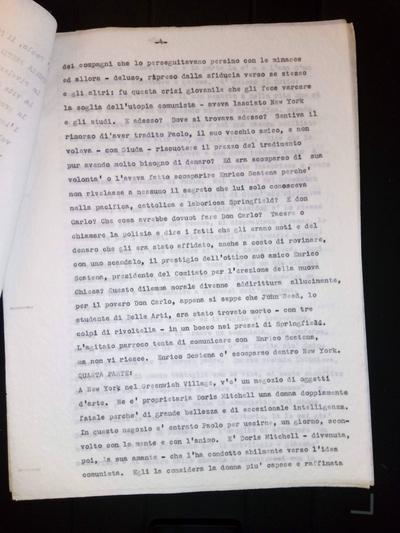
I genitori dicono che il giovane aveva abbandonato gli studi e fatto improvvisamente ritorno a casa col proposito di entrare negli affari. Però non trovava alcuna sistemazione e da cinque o sei mesi stava preoccupando il padre il quale teme, adesso, qualche follia da parte del figlio. – Anche Don Carlo è preoccupato poiché conosce tutto un retroscena che gli altri ignorano. Cinque giorni fa condottovi da Enrico Scatena, John Reed è stato nella sua casa ed ha ripetuto l'incredibile storia dei quadri di Gesù. Ha detto che Paolo lo convinse ad entrare nella fila comunista dove, per un po' di tempo, rimase attivissimo e più che entusiasta dell'esaltato ambiente che trovò. Aveva l'incarico di fare dei quadri – marine, scene di campagna – sopra delle speciali tavolette che un misterioso individuo, di cui mai seppe il vero nome, gli portava a casa. Negli ultimi tempi gli facevano fare e rifare, in atteggiamenti diversi, un ritratto di Gesù senza che ne fossero mai soddisfatti. Egli incominciava a stancarsi, non tollerava la disciplina che gli imponevano, aveva avuto dei litigi con Paolo e s'era allontanato dal gruppo. Ma non era facile staccarsi dei compagni che lo perseguitavano persino con le minacce ed allora - deluso, ripreso dalla sfiducia verso se stesso e gli altri: fu questa crisi giovanile che gli fece varcare la soglia dell'utopia comunista - aveva lasciato New York e gli studi. E adesso? Dove si trovava adesso? Sentiva il rimorso di aver tradito Paolo, il suo vecchio amico, e non voleva - con Giuda - riscuotere il prezzo del tradimento pur avendo molto bisogno di denaro? Ed era scomparso di sua volontà o l'aveva fatto scomparire Enrico Scatena perché non rivelasse a nessuno il segreto che lui solo conosceva nella pacifica, cattolica e laboriosa Springfield? E don Carlo? Che cosa avrebbe dovuto fare Don Carlo? Tacere o chiamare la polizia e dire i fatti che gli erano noti e del denaro che gli era stato affidato, anche a costo di rovinare, con uno scandalo, il prestigio dell'ottimo suo amico Enrico Scatena, presidente del Comitato per l'erezione della nuova Chiesa? Questo dilemma morale divenne addirittura allucinante, per il povero Don Carlo, appena si seppe che John Reed, lo studente di Belle Arti, era stato trovato morto - con tre colpi di rivoltella - in un bosco nei pressi di Springfield. L'agitato parroco tenta di comunicare con Enrico Scatena, ma non vi riesce. Enrico Scatena è scomparso dentro New York.
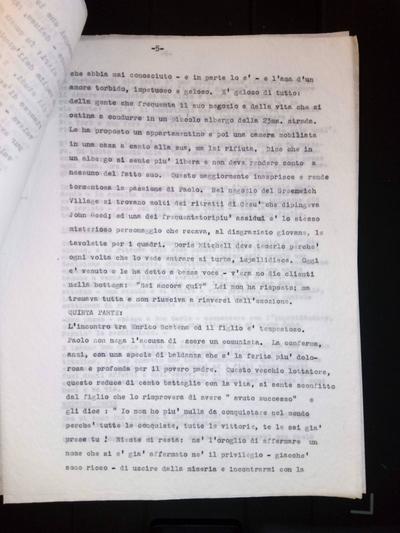
A New York nel Greenwich Village, v'è un negozio di oggetti d'arte. Ne è proprietaria Doris Mitchell una donna doppiamente fatale perché di grande bellezza e di eccezionale intelligenza. In questo negozio è entrato Paolo per uscirne, un giorno, sconvolto con la mente e con l'animo. È Doris Mitchell - divenuta, poi, la sua amante - che l'ha condotto abilmente verso l'idea comunista. Egli la considera la donna più capace e raffinata che abbia mai conosciuto – e in parte lo è – e l'ama d'un amore torbido, impetuoso e geloso. È geloso di tutto: della gente che frequenta il suo negozio e della vita che si ostina a condurre in un piccolo albergo della 23ma. strada. Le ha proposto un appartamentino e poi una camera mobiliata in una casa a canto alla sua, ma lei rifiuta. Dice che in un albergo si sente più libera e non deve rendere conto a nessuno del fatto suo. Questo maggiormente inasprisce e rende tormentosa la passione di Paolo. Nel negozio del Greenwich Village si trovano molti dei ritratti di Gesù che dipingeva John Reed; ed una dei frequentatori più assidui è lo stesso misterioso personaggio che recava, al disgraziato giovane, le tavolette per i quadri. Doris Mitchell deve temerlo perché ogni volta che lo vede entrare si turba, impallidisce. Oggi è venuto e le ha detto a bassa voce – v'era no die clienti nella bottega: "Sei ancora qui?" Lei non ha risposto; ma tremava tutta e non riusciva a riaversi dall'emozione.
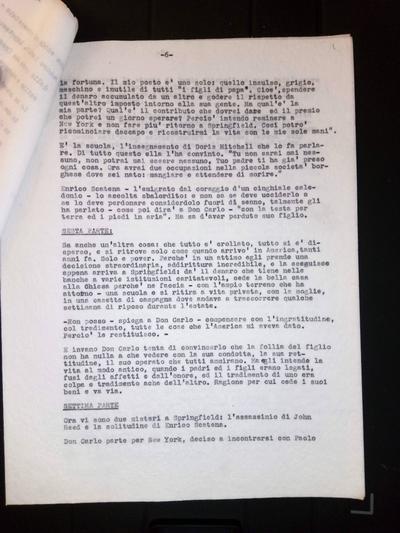
L'incontro tra Enrico Scatena ed il figlio è tempestoso. Paolo non nega l'accusa di essere un comunista. La conferma, anzi, con una specie di baldanza che è la ferita più dolorosa e profonda per il povero padre. Questo vecchio lottatore, questo reduce di cento battaglie con la vita, si sente sconfitto dal figlio che lo rimprovera di avere "avuto successo" e gli dice: "Io non ho più nulla da conquistare nel mondo perché tutte le conquiste, tutte le vittorie, te le sei già prese tu! Niente mi resta: né l'orgoglio di affermare un nome che si è già affermato né il privilegio – giacché sono ricco – di uscire dalla miseria e incontrarmi con la la fortuna. Il mio posto è uno solo: quello insulso, grigio, meschino e inutile di tutti "i figli di papa". Cioè, spendere il denaro accumulato da un altro e godere il rispetto da quest'altro imposto intorno alla sua gente. Ma qual'è la mia parte? Qual'è il contributo che dovrei dare ed il premio che potrei un giorno sperare? Perciò intendo reminere a New York e non fare più ritorno a Springfield. Così potrò ricominciare daccapo e ricostruirmi la vita con le mie sole mani".
È la scuola, l'insegnamento di Doris Mitchell che lo fa parlare. Di tutto questo ella l'ha convinto. "Tu non sarai mai nessuno, non potrai mai essere nessuno, Tuo padre ti ha già preso ogni cosa. Ora avrai due occupazioni nella piccola società borghese dove sei nato: mangiare e attendere di morire."
Enrico Scatena - l'emigrato dal coraggio d'un cinghiale calabro - lo ascolta sbalordito: e non sa se deve ucciderlo o se lo deve perdonare considerdolo fuori di senno, talmente gli ha parlato - come poi dirà a Don Carlo - "con la testa per terra ed i piedi in aria". Ma sa d'aver perduto suo figlio.
Sa anche un'altra cosa: che tutto è crollato, tutto si è disperso, e si ritrova solo come quando arrivò in America, tanti anni fa. Solo e povero. Perché in un attimo egli prende una decisione straordinaria, addirittura incredibile, e la eseguisce appena arriva a Springfield: dà il denaro che tiene nelle banche a varie istituzioni caritatevoli, cede la bella casa alla Chiesa perché ne faccia - con l'ampio terreno che ha attorno - una scuola e si ritira a vita privata, con la moglie, in una casetta di campagna dove andava a trascorrere qualche settimana di riposo durante l'estate.
— Non posso - spiega a Don Carlo - compensare con l'ingratitudine, col tradimento, tutte le cose che l'America mi aveva dato. Perciò le restituisco. -
E invano Don Carlo tenta di convincerlo che la follia del figlio non ha nulla a che vedere con la sua condotta, la sua rettitudine, il suo operato che tutti ammirano. Ma egli intende la vita al modo antico, quando i padri ed i figli erano legati, fusi dagli affetti e dall'onore, ed il tradimento di uno era colpa e tradimento anche dell'altro. Ragione per cui cede i suoi beni e va via.
Ora vi sono due misteri a Springfield: l'assassinio di John Reed e la solitudine di Enrico Scatena.
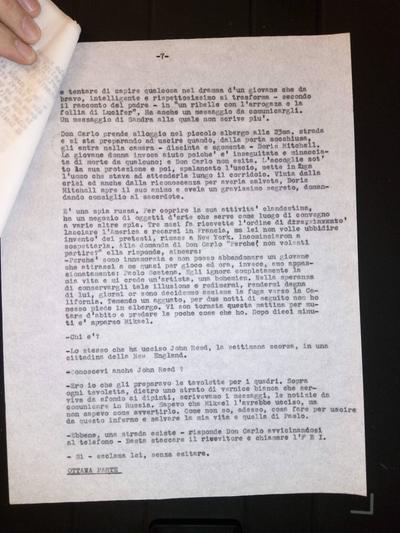
Don Carlo parte per New York, deciso a incontrarsi con Paolo e tentare di capire qualcosa nel dramma d'un giovane che da bravo, intelligente e rispettosissimo si trasforma - secondo il racconto del padre - in "un ribelle con l'arroganza e la follia di Lucifer". Ha anche un messaggio da comunicargli. Un messaggio di Sandra alla quale non scrive più.
Don Carlo prende alloggio nel piccolo albergo alla 23ma. strada e si sta preparando ad uscire quando, dalla porta socchiusa, gli entra nella camera - discinta e sgomenta - Doris Mitchell. La giovane donna invoca aiuto poiché è inseguitata e minacciata di morte da qualcuno; e Don Carlo non esita. L'accoglie sotto la sua protezione e poi, spalancato l'uscio, mette in fuga l'uomo che stava ad attenderla lungo il corridoio. Vinta dalla crisi ed anche dalla riconoscenza per averla salvata, Doris Mitchell apre il suo animo e svela un gravissimo segreto, domandando consiglio al sacerdote.
È una spia russa. Per coprire la sua attività clandestina, ha un negozio di oggetti d'arte che serve come luogo di convegno a varie altre spie. Tre mesi fa ricevette l'ordine di diramare l'America e recarsi in Francia, ma lei non volle ubbidire inventò dei pretesti, rimase a New York. Incominciarono a sospettarla. Alla domanda di Don Carlo "Perché non volesti partire?" ella risponde, sincera: -Perché sono innamorata e non posso abbandonare un giovane che attrassi a me quasi per gioco ed ora, invece, amo appassionatamente: Paolo Sestena. Egli ignora completamente la mia vita e mi crede un'artista, una bohémien. Nella speranza di conservargli tale illusione e redimermi, rendermi degna di lui, giorni or sono decidemmo assieme la fuga verso la California. Temendo un agguato, per due notti di seguito non ho messo piede in albergo. Vi son tornata questa mattina per mutare d'abito e predere le poche cose che ho. Dopo dieci minuti è apparso Mikael.
— Chi è?
— Lo stesso che ha ucciso John Reed, la settimana scorsa, in una cittadina della New England.
— Conoscevi anche John Reed?
— Ero io che gli preparavo le tavolette per i quadri. Sopra ogni tavoletta, dietro uno strato di vernice bianca che serviva da sfondo ai dipinti, scrivevamo i messaggi, le notizie da comunicare in Russia. Sapevo che Mikael l'avrebbe ucciso, ma non sapevo come avvertirlo. Come non so, adesso, cosa fare per uscire da questo inferno e salvare la mia vita e quella di Paolo.
— Ebbene, una strada esiste — risponde Don Carlo avvicinandosi al telefono - Basta staccare il ricevitore e chiamare l'FBI.
— Sì — esclama lei, senza esitare.
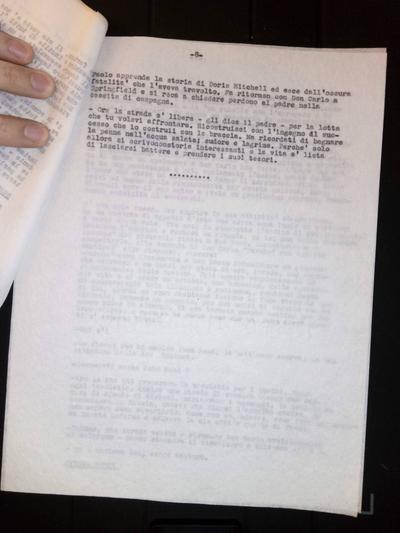
Paolo apprende la storia di Doris Mitchell ed esce dall'oscura fatalità che l'aveva travolto. Fa ritorno con Don Carlo a Springfield e si reca a chiedere perdono al padre nella cassetta di campagna.
— Ora la strada è libera — gli dice il padre — per la lotta che tu volevi affrontare. Ricostruisci con l'ingegno il successo che io costruii con le braccia. Ma ricordati di bagnare la penna nell'acqua salata; sudore e lagrime. Perché solo allora si scrivono storie interessanti e la vita è lieta di lasciarsi battere e prendere i suoi tesori.
by Franco Lalli
No. 23 William Street. — This is the handsome home of Enrico Scatena, an immigrant who forty years ago owned nothing and today ranks among Springfield’s wealthiest and most influential citizens: a shareholder in the “Franklin Bank,” an honorary member of the police force, Chairman of the Committee for the construction of a new church, and co-owner of a weekly newspaper—the town’s only paper—which is enjoying great success: “The Springfield News.” — Enrico Scatena has achieved all this through hard work and with the courage of a Calydonian boar: struggling, educating himself, attending night school, and finally making his fortune in construction. At fifty, he is what is known as a “successful man.” But he has no intention of stopping. He still has one dream, a great dream: to turn “The Springfield News” into a daily newspaper and place his only son, Paolo, at its head. Paolo is studying journalism at Columbia University in New York. — A motive transcending paternal pride and the complete triumph of the “self-made man” drives him toward this last, supremely daring enterprise. He fears that Paolo may be “stolen” from him by the city, find a position with some newspaper, and settle in New York. During his last summer vacation, in fact, the young man was restless, pensive, often in a bad mood, as though everything bored him: the house and the provincial surroundings that had nevertheless been so dear to him in childhood.
Even with Sandra, his fiancée, the wealthy and aristocratic American girl who loves him deeply, he sometimes behaved coldly and almost rudely. And so his father—a man of action and swift intuition—has decided to bind him with the chains of the “Springfield News.”
This is the hour of Enrico Scatena’s greatest triumph. At a banquet attended by the authorities, the parish priest, Father Carlo, and the town’s most prominent families, he presents the president of the “Franklin Bank” with an initial check for one hundred thousand dollars on behalf of the group whose financial backing he has secured for the newspaper project. He then delivers a speech, lashing out against his only enemy in the world: an enemy he hates unto death—Communism. He says that wars, revolutions, and political parties cannot alter the destiny of individuals or bestow prosperity and happiness upon the masses. Taking America as his example, along with his own life and the lives of the distinguished men seated beside him, he says that every man must write his own story “as we have written ours”: by dipping his pen in salt water—sweat and tears, labor and sacrifice. There are no other ways to succeed, nor any other stories worth reading or hearing. Finally, he offers a reward of five thousand dollars to anyone who can point out to him a single Communist anywhere in Springfield, so convinced is he of the order, traditions, and principles animating the industrious, modern town to which he intends to give a newspaper. — The speech has been prominently featured in the “Springfield News,” and now John Reed has come forward to claim the reward. There is a Communist in Springfield, and that man
is Paolo, Enrico Scatena’s son.
The revelation—supported by irrefutable evidence—turns Enrico Scatena’s life upside down. As a man of honor, he keeps his promise, entrusting the five thousand dollars to Father Carlo under a pledge of absolute silence, and then leaves for New York to meet his son. — But John Reed—a former art student and close friend of Paolo’s—does not come to collect the money. He vanishes from Springfield, and neither the police nor his family can trace him.
His parents say the young man had abandoned his studies and suddenly returned home intending to go into business. But he had been unable to find any suitable position, and for the past five or six months had been worrying his father, who now fears that his son may do something desperate. — Father Carlo, too, is worried, for he knows the whole story behind the affair, which the others do not. Five days ago, brought there by Enrico Scatena, John Reed came to his house and repeated the incredible story of the paintings of Jesus. He said that Paolo had persuaded him to join the Communist ranks, where for a time he remained intensely active and more than enthusiastic about the fervid atmosphere he found there. His assignment was to paint pictures—seascapes, country scenes—on special little panels that a mysterious man, whose real name he never learned, brought to his home. Lately they had made him paint and repaint a portrait of Jesus in different poses, but they were never satisfied. He was beginning to tire of it; he could no longer tolerate the discipline they imposed upon him; he had quarreled with Paolo and withdrawn from the group. But it was not easy to break away
from the comrades, who hounded him even with threats, and so—disillusioned, once again overcome by distrust of himself and others, the very youthful crisis that had first driven him across the threshold of the Communist utopia—he had left New York and abandoned his studies. And now? Where was he now? Did he feel remorse for having betrayed Paolo, his old friend, and, like Judas, refuse to collect the price of his betrayal, even though he badly needed the money? Had he disappeared of his own accord, or had Enrico Scatena made him disappear so that he would reveal to no one the secret he alone knew in peaceful, Catholic, industrious Springfield? And Father Carlo? What was Father Carlo to do? Remain silent, or call the police and tell them the facts he knew and about the money entrusted to him, even at the cost of destroying, through scandal, the prestige of his excellent friend Enrico Scatena, Chairman of the Committee for the construction of the new church? For poor Father Carlo, this moral dilemma became positively nightmarish as soon as word spread that John Reed, the art student, had been found dead—with three revolver bullets in his body—in a wood near Springfield. The distraught parish priest tries to contact Enrico Scatena, but cannot reach him. Enrico Scatena has vanished into New York.
In Greenwich Village, New York, there is a shop selling art objects. Its owner is Doris Mitchell, a doubly fatal woman, for she possesses both great beauty and exceptional intelligence. Paolo entered this shop and one day emerged from it shaken in mind and soul. It was Doris Mitchell—who later became his lover—who skillfully led him toward the Communist idea. He considers her the most capable and sophisticated woman
he has ever known—and, in part, she is—and he loves her with a dark, impetuous, jealous passion. He is jealous of everything: of the people who frequent her shop and of the life she insists on leading in a small hotel on 23rd Street. He has offered her a small apartment, and then a furnished room in a house next to his own, but she refuses. She says that in a hotel she feels freer and need answer to no one for what she does. This only embitters Paolo further and makes his passion more tormenting. Many of the portraits of Jesus painted by John Reed can be found in the Greenwich Village shop; and one of its most regular visitors is the very same mysterious man who used to bring the unfortunate young artist the panels for his paintings. Doris Mitchell must be afraid of him, for whenever she sees him enter, she grows agitated and turns pale. Today he came in and said to her in a low voice—there were nine or ten customers in the shop: “Are you still here?” She did not answer; but she was trembling all over and could not recover from the shock.
The meeting between Enrico Scatena and his son is stormy. Paolo does not deny the accusation that he is a Communist. On the contrary, he confirms it with a kind of bravado that inflicts the most painful and profound wound of all upon his poor father. This old fighter, this veteran of a hundred battles with life, feels himself defeated by the son who reproaches him for having “succeeded” and tells him: “There is nothing left for me to conquer in this world, because you have already claimed every conquest, every victory for yourself! Nothing remains to me: neither the pride of making a name for myself, since that name has already been made, nor the privilege—since I am rich—of rising out of poverty and coming face to face with the
luck. There is only one place for me: the dull, gray, petty, useless place occupied by all “daddy’s boys.” That is, spending the money another man has amassed and enjoying the respect that man has commanded among his people. But what is my part in it? What contribution am I supposed to make, and what reward could I ever hope for? That is why I intend to remain in New York and never return to Springfield. Here I can start over and rebuild my life with my own two hands.”
It is Doris Mitchell’s schooling, her teaching, that makes him speak this way. She has convinced him of all this. “You will never be anyone, you can never be anyone. Your father has already taken everything from you. Now you will have only two occupations in the little middle-class society where you were born: eating and waiting to die.”
Enrico Scatena—the immigrant with the courage of a Calabrian boar—listens to him in astonishment, not knowing whether he ought to kill him or forgive him as a man out of his mind, so utterly has he spoken—as he will later tell Don Carlo—“with his head on the ground and his feet in the air.” But he knows that he has lost his son.
He knows something else as well: that everything has collapsed, everything has scattered, and he is alone once more, as he was when he arrived in America so many years ago. Alone and poor. For in an instant he makes an extraordinary, indeed incredible, decision, and carries it out as soon as he reaches Springfield: he gives the money he has in the banks to various charitable institutions, turns over his beautiful house to the Church so that it may use it—together with the broad grounds surrounding it—as a school, and withdraws into private life with his wife, in a little country cottage where he used to spend a few weeks resting during the summer.
“I cannot,” he explains to Don Carlo, “repay all the things America has given me with ingratitude and betrayal. And so I am giving them back.”
In vain Don Carlo tries to persuade him that his son’s madness has nothing to do with his own conduct, his integrity, his deeds, which everyone admires. But he understands life in the old way, when fathers and sons were bound together, fused by affection and honor, and the betrayal of one was also the guilt and betrayal of the other. For that reason, he gives up his possessions and goes away.
There are now two mysteries in Springfield: the murder of John Reed and the solitude of Enrico Scatena.
Don Carlo leaves for New York, determined to meet with Paolo
and try to understand something of the drama of a young man who, from good, intelligent, and deeply respectful, has become—according to his father—“a rebel with the arrogance and madness of Lucifer.” He also has a message to give him. A message from Sandra, to whom Paolo no longer writes.
Don Carlo takes a room in the little hotel on Twenty-third Street and is preparing to go out when, through the half-open door, Doris Mitchell stumbles into his room, disheveled and terrified. The young woman begs for help, for someone is pursuing her and has threatened to kill her; and Don Carlo does not hesitate. He takes her under his protection and then, flinging the door wide, drives off the man who was waiting for her in the corridor. Overcome by the ordeal, and grateful to him for saving her, Doris Mitchell opens her heart and reveals a terrible secret, asking the priest for advice.
She is a Russian spy. To conceal her clandestine activities, she runs an art shop that serves as a meeting place for several other spies. Three months ago, she received orders to leave America and go to France, but she refused to obey, invented excuses, and remained in New York. They began to suspect her. When Don Carlo asks, “Why did you refuse to leave?” she answers sincerely:
“Because I am in love, and I cannot abandon a young man whom I first lured to me almost as a game, but whom I now love passionately: Paolo Scatena. He knows nothing at all about my life and believes me to be an artist, a bohemian. Hoping to preserve that illusion for him, to redeem myself and become worthy of him, a few days ago we decided together to flee to California. Fearing an ambush, I stayed away from the hotel for two nights in a row. I went back this morning to change my clothes and collect the few things I own. Ten minutes later, Mikael appeared.”
“Who is he?”
“The same man who killed John Reed last week, in a little New England town.”
“You knew John Reed too?”
“I was the one who prepared the panels for his paintings. On each panel, beneath a layer of white paint that served as the background for the pictures, we wrote the messages, the information to be sent to Russia. I knew Mikael was going to kill him, but I did not know how to warn him. Just as I do not know now what I can do to escape this hell and save my life and Paolo’s.”
“Well, there is one way,” Don Carlo replies, moving toward the telephone. “All we need do is pick up the receiver and call the FBI.”
“Yes,” she exclaims without hesitation.
Paolo learns the truth about Doris Mitchell and emerges from the dark fatality that had overwhelmed him. He returns to Springfield with Don Carlo and goes to ask his father’s forgiveness at the country cottage.
“Now the road is clear,” his father tells him, “for the struggle you wanted to undertake. Rebuild with your mind the success I built with my arms. But remember to dip your pen in salt water: sweat and tears. For only then are compelling stories written, and life is willing to be conquered and surrender its treasures.”