I Manoscritti / Original Typescripts · 5 fogli
Page 1
Page 2
Page 3
Page 4
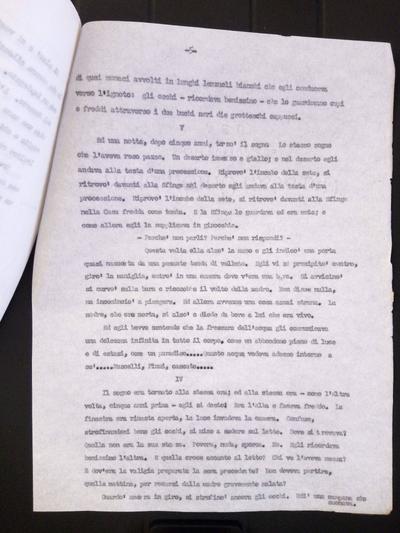
Page 5
“The Dream” is a short psychological-fantastic tale with symbolic, allegorical imagery. An unnamed office worker receives a telegram from his sister: “Mother dying. Come at once.” He cannot catch the evening connections to his mountain village, so he plans to leave at 6:30 a.m., convinced his mother is already dead. Exhausted by anxiety, he falls into a deep sleep and has an overwhelming dream: he leads a silent procession of hooded monks across an immense yellow desert, each carrying a towering metal cross. The march feels endless; thirst becomes a collective torment, and Death seems to stalk them. At sunset they reach the Sphinx’s colossal house. He begs the mute Sphinx for water, then rages and is trapped behind an iron door, waking in terror at dawn.
But the dream does not release him. Awake, he still believes he must send water to the desert, then becomes fixated on acquiring a robe and cross. His harmless “madness,” as doctors would call it, lasts five years: he lives as a vagrant, staging nocturnal marches with an imaginary army. One night the same dream returns. This time the Sphinx points to a hidden door: inside a coffin lies his mother, who rises and gives him water. He wakes at dawn in a different, filthy room, beside a cross, confused by lost time as a bell rings. Themes include grief, guilt, delirium, and the mind’s porous boundary between dream and life.
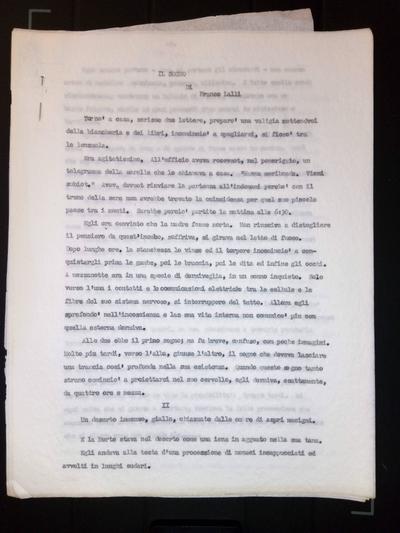
Di Franco Lalli
Tornò a casa, scrisse due lettere, preparò una valigia mettendovi della biancheria e dei libri, incominciò a spogliarsi, si ficcò tra le lenzuola.
Era agitatissimo. All'ufficio aveva ricevuto, nel pomeriggio, un telegramma della sorella che lo chiamava a casa. "Mamma moribonda. Vieni subito." Aveva dovuto rinviare la partenza all'indomani perché con il treno della sera non avrebbe trovato la coincidenza per quel suo piccolo paese tra i monti. Sarebbe perciò partito la mattina alle 6:30.
Egli era convinto che la madre fosse morta. Non riusciva a distogliere il pensiero da quest'incubo, soffriva, si girava nel letto di fuoco. Dopo lunghe ore, la stanchezza lo vinse ed il torpore incominciò a conquistargli prima le gambe, poi le braccia, poi le dita ed infine gli occhi. A mezzanotte era in una specie di dormiveglia, in un sonno inquieto. Solo verso l'una i contatti e le comunicazioni elettriche tra le cellule e le fibre del suo sistema nervoso, si interruppero del tutto. Allora egli sprofondò nell'incoscienza e la sua vita interna non comunicò più con quella esterna dormiva.
Alle due ebbe il primo sogno; ma fu breve, confuso, con poche immagini. Molto più tardi, verso l'alba, giunse l'altro, il sogno che doveva lasciare una traccia così profonda nella sua esistenza. Quando questo sogno tanto strano cominciò a proiettarsi nel suo cervello, egli dormiva, esattamente, da quattro ore e mezza.
Un deserto immenso, giallo, crivellato dalle ombre di aspri macigni.
E la Morte stava nel deserto come una iena in agguato nella sua tana.
Egli andava alla testa d'una processione di monaci incappucciati ed avvolti in lunghi sudari.
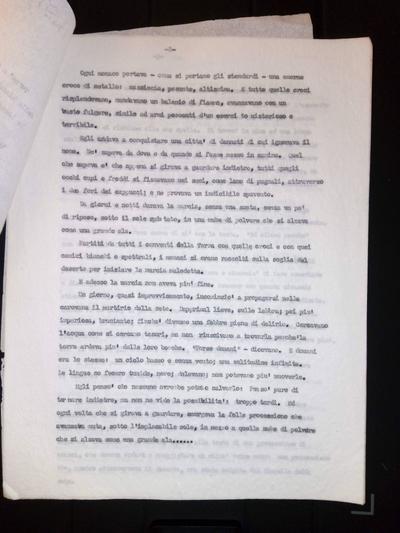
Ogni monaco portava – come si portano gli stendardi – una enorme croce di metallo: massiccia, pesante, altissima. E tutte quelle croci risplendevano, mandavano un balenio di fiamma, avanzavano con un vasto fulgore, simile ad armi possenti d'un esercito misterioso e terribile.
Egli andava a conquistare una città di dannati di cui ignorava il nome. Ne sapeva da dove e da quando si fosse messo in cammino. Quel che sapeva è che appena si girava a guardare indietro, tutti quegli occhi cupi e freddi si fissavano nei suoi, come lame di pugnali, attraverso i due fori dei cappucci; e ne provava un indicibile spavento.
Di giorni e notti durava la marcia, senza una sosta, senza un po' di riposo, sotto il sole spietato, in una nube di polvere che si alzava come una grande ala.
Partiti da tutti i conventi della Terra con quelle croci e con quei camici bianchi e spettrali, i monaci si erano raccolti sulla soglia del deserto per iniziare la marcia maledetta.
E adesso la marcia non aveva più fine.
Un giorno, quasi improvvisamente, incominciò a propagarsi nella carovana il martirio della sete. Dapprima lieve, sulle labbra; poi più imperiosa, bruciante; finché divenne una febbre piena di delirio. Cercavano l'acqua come si cercano tesori, ma non riuscivano a trovarla perché la terra ardeva più delle loro bocche. "Forse domani" – dicevano. E domani era lo stesso: un cielo basso e senza vento; una solitudine infinita. Le lingue se fecero tumide, nere; dolevano; non potevano più muoverle.
Egli pensò che nessuno avrebbe potuto salvarlo: Pensò pure di tornare indietro, ma non ne vide la possibilità: troppo tardi. Ed ogni volta che si girava a guardare, scorgeva la folle processione che avanzava muta, sotto l'implacabile sole, in mezzo a quella nube di polvere che si alzava come una grande ala......
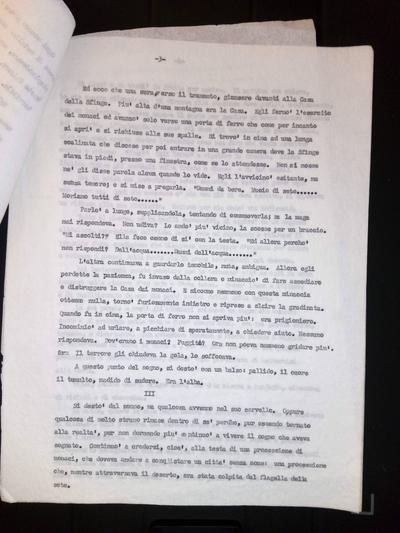
Ed ecco che una sera, verso il tramonto, giunsero davanti alla Casa della Sfinge. Più alta d'una montagna era la Casa. Egli fermò l'esercito dei monaci ed avanzò solo verso una porta di ferro che come per incanto si aprì e si richiuse alle sue spalle. Si trovò in cima ad una lunga scalinata che discese per poi entrare in una grande camera dove la Sfinge stava in piedi, presso una finestra, come se lo attendesse. Non si mosse né gli disse parola alcuna quando lo vide. Egli l'avvicinò esitante, ma senza tenere; e si mise a pregarla. "Dammi da bere. Muoio di sete...... Moriamo tutti di sete......"
Parlò a lungo, supplicandola, tentando di commuoverla; ma la maga mai rispondeva. Non udiva? Le andò più vicino, la scosse per un braccio. "Mi ascolti?" Ella fece cenno di sì con la testa. "Ed allora perché non rispondi? Dell'acqua...... Dammi dell'acqua......"
L'altra continuava a guardarlo immobile, muta, ambigua. Allora egli perdette la pazienza, fu invaso dalla collera e minacciò di fare assediare e distruggere la Casa dai monaci. E siccome nemmeno con questa minaccia ottenne nulla, tornò furiosamente indietro e riprese a salire la gradinata. Quando fu in cima, la porta di ferro non si apriva più: era prigioniero. Incominciò ad urlare, a picchiare di speratamente, a chiedere aiuto. Nessuno rispondeva. Dov'erano i monaci? Fuggiti? Ora non poteva nemmeno gridare più. Era: Il terrore gli chiudeva la gola, lo soffocava.
A questo punto del sogno, si destò con un balzo: pallido, il cuore il tumulto, madido di sudore. Era l'alba.
Si destò dal sonno, ma qualcosa avvenne nel suo cervello. Oppure qualcosa di molto strano rimase dentro di sé perché, pur essendo tornato alla realtà, pur non dormendo più continuò a vivere il sogno che aveva sognato. Continuò a credersi, cioè, alla testa di una processione di monaci, che doveva andare a conquistare un città senza nome: una processione che, mentre attraversava il deserto, era stata colpita dal flagella della sete.
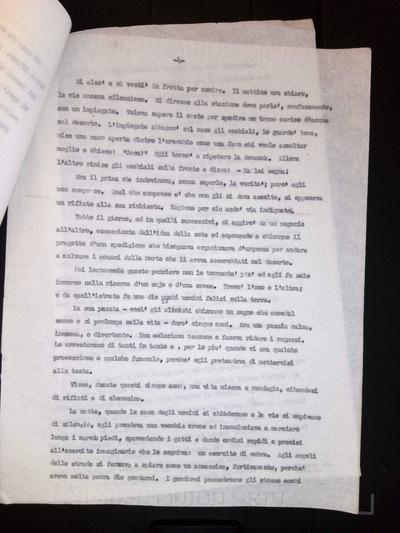
Si alzò e si vestì in fretta per uscire. Il mattino era chiaro, le vie ancora silenziose. Si diresse alla stazione dove parlò, confusamente, con un impiegato. Voleva sapere il costo per spedire un treno carico d'acqua nel deserto. L'impiegato abbassò sul naso gli occhiali, lo guardò bene, mise una mano aperta dietro l'orecchio come usa fare chi vuole ascoltar meglio e chiese: "Cosa?" Egli tornò a ripetere la domanda. Allora l'altro rimise gli occhiali sulla fronte e disse: – Ma lei sogna!
Era il primo che indovinava, senza saperlo, la verità; però egli non comprese. Quel che comprese è che non gli si dava ascolto, si opponeva un rifiuto alla sua richiesta. Ragione per cui andò via indignato.
Tutto il giorno, ed in quelli successivi, si aggirò da un negozio all'altro, ossessionato dall'idea della sete ed esponendo a chiunque il progetto d'una spedizione che bisognava organizzare d'urgenza per andare a salvare i monaci dalla Morte che li aveva accerchiati nel deserto.
Poi lentamente questo pensiero non lo tormentò più ed egli fu solo immerso nella ricerca d'un sajo e d'una croce. Trovò l'uno e l'altra; e da quell'istante fu uno dei pochi uomini felici sulla terra.
La sua pazzia – così gli alienisti chiamano un segno che esce dal sonno e si prolunga nella vita – durò cinque anni. Era una pazzia calma, innocua, e divertente. Non molestava nessuno e faceva ridere i ragazzi. Lo arrestavano di tanti in tanto e, per lo più quando vi era qualche processione o qualche funerale, perché egli pretendeva di mettersi alla testa.
Visse, durante questi cinque anni, una vita misera e randagia, cibandosi di rifiuti e di elemosine.
La notte, quando le case degli uomini si chiudevano e le vie si empivano di silenzio, egli prendeva una vecchia croce ed incominciava a marciare lungo i marciapiedi, spaventando i gatti e dando ordini rapidi e precisi all'esercito immaginario che lo seguiva: un esercito di ombre. Agli angoli delle strade si fermava a spiare come un assassino, furtivamente, perché aveva molta paura dei gendarmi. I gendarmi possedevano gli stessi occhi di quei monaci avvolti in lunghi lenzuoli bianchi che egli conduceva verso l'ignoto: gli occhi — ricordava benissimo — che lo guardavano cupi e freddi attraverso i due buchi neri dei grotteschi cappucci.
Ed una notte, dopo cinque anni, tornò il sogno. Lo stesso sogno che l'aveva reso pazzo. Un deserto immenso e giallo; e nel deserto egli andava alla testa d'una processione. Riprovò l'incubo della sete, si ritrovò davanti alla Sfinge nel deserto egli andava alla testa d'una processione. Riprovò l'incubo della sete, si ritrovò davanti alla Sfinge nella Casa fredda come tomba. E la Sfinge lo guardava ed era muta; e come allora egli la supplicava in ginocchio.
— Perché non parli? Perché non rispondi? —
Questa volta ella alzò la mano e gli indicò una porta quasi nascosta da una pesante tenda di velluto. Egli vi si precipitò contro, girò la maniglia, entrò in una camera dove v'era una bara. Si avvicinò al curvo sulla bara e riconobbe il volto della madre. Non disse nulla, ma incominciò a piangere. Ed allora avvenne una cosa assai strana. La madre, che era morta, si alzò e diede da bere a lui che era vivo.
Ed egli bevve sentendo che la frescura dell'acqua gli comunicava una dolcezza infinita in tutto il corpo, come un abbandono pieno di luce e di estasi, come un paradiso...... Quanto acqua vedeva adesso intorno a sé...... Ruccelli, Mimi, cascato......
Il sogno era tornato alla stessa ora; ed alla stessa ora — come l'altra volta, cinque anni prima — egli si destò. Era l'alba e faceva freddo. La finestra era rimasta aperta, la luce invadeva la camera. Confuso, strofinandosi bene gli occhi, si mise a sedere sul letto. Dove si trovava? Quella non era la sua stanza. Povera, nuda, sporca. No. Egli ricordava benissimo l'altra. E quella croce accanto al letto? Chi ve l'aveva messa? E dov'era la valigia preparata la sera precedente? Non doveva partire, quella mattina, per recarsi dalla madre gravemente malata?
Guardò ancora in giro, si strofinò ancora gli occhi. Udì una campana che suonava.
By Franco Lalli
He returned home, wrote two letters, packed a suitcase with some clothes and books, began to undress, and slipped between the sheets.
He was extremely agitated. That afternoon at the office he had received a telegram from his sister summoning him home. “Mother dying. Come at once.” He had been forced to postpone his departure until the following day because the evening train would not have connected with the train to his little village in the mountains. He would therefore leave at 6:30 in the morning.
He was convinced that his mother was dead. He could not tear his thoughts away from this nightmare; he suffered, tossing and turning in his burning bed. After long hours, exhaustion overcame him, and numbness began to take possession first of his legs, then his arms, then his fingers, and finally his eyes. At midnight he was in a kind of half-sleep, a restless slumber. Only around one did the electrical contacts and communications between the cells and fibers of his nervous system cease altogether. Then he sank into unconsciousness, and his inner life no longer communicated with the outer world: he slept.
At two he had his first dream, but it was brief, confused, with few images. Much later, toward dawn, came the other one, the dream that was to leave so deep a mark upon his existence. When this strange dream began to unfold in his brain, he had been asleep for exactly four and a half hours.
An immense yellow desert, riddled with the shadows of jagged boulders.
And Death lurked in the desert like a hyena lying in wait in its lair.
He marched at the head of a procession of hooded monks wrapped in long shrouds.
Each monk carried—as banners are carried—an enormous metal cross: solid, heavy, towering. And all those crosses shone, flashing like flame, advancing in a vast blaze of light, like the mighty weapons of a mysterious and terrible army.
He was going to conquer a city of the damned whose name he did not know. Nor did he know where or when he had set out. What he did know was that whenever he turned to look behind him, all those dark, cold eyes fastened upon his own like dagger blades through the two holes in their hoods; and they filled him with unspeakable dread.
The march lasted for days and nights, without a halt, without a moment’s rest, beneath the merciless sun, in a cloud of dust that rose like a great wing.
Having set out from every monastery on Earth, bearing those crosses and dressed in those white, spectral robes, the monks had gathered at the edge of the desert to begin the accursed march.
And now the march had no end.
One day, almost without warning, the torment of thirst began to spread through the caravan. At first it was faint, merely upon the lips; then more urgent, burning, until it became a fever filled with delirium. They searched for water as men search for treasure, but could not find it, for the earth burned more fiercely than their mouths. “Perhaps tomorrow,” they said. And tomorrow was the same: a low, windless sky; an infinite solitude. Their tongues grew swollen and black; they ached; they could no longer move them.
He thought no one could save him. He also thought of turning back, but saw no way to do so: it was too late. And whenever he turned to look, he saw the mad procession advancing in silence beneath the implacable sun, amid that cloud of dust rising like a great wing......
And then one evening, toward sunset, they came to the House of the Sphinx. The House was taller than a mountain. He halted the army of monks and advanced alone toward an iron door which, as if by magic, opened and closed behind him. He found himself at the top of a long staircase, which he descended before entering a vast chamber where the Sphinx stood beside a window, as though awaiting him. She neither moved nor spoke when she saw him. He approached her hesitantly, though without fear, and began to implore her. “Give me something to drink. I’m dying of thirst...... We’re all dying of thirst......”
He spoke for a long while, pleading with her, trying to move her; but the sorceress never answered. Could she not hear him? He went closer and shook her by the arm. “Can you hear me?” She nodded. “Then why don’t you answer? Water...... Give me water......”
She continued to stare at him, motionless, mute, inscrutable. Then he lost patience, was seized by anger, and threatened to have the monks lay siege to the House and destroy it. And when even this threat achieved nothing, he turned furiously away and began to climb the staircase again. When he reached the top, the iron door would no longer open: he was a prisoner. He began to scream, to pound desperately upon it, to call for help. No one answered. Where were the monks? Had they fled? Now he could no longer even cry out. Terror closed his throat and suffocated him.
At this point in the dream, he awoke with a start: pale, his heart in tumult, drenched in sweat. It was dawn.
He awoke from sleep, but something had happened in his brain. Or else something very strange remained inside him, because although he had returned to reality, although he was no longer asleep, he continued to live the dream he had dreamed. That is, he continued to believe himself at the head of a procession of monks, bound to conquer a nameless city: a procession which, while crossing the desert, had been struck by the scourge of thirst.
He rose and dressed hurriedly to go out. The morning was bright, the streets still silent. He made his way to the station, where he spoke confusedly with a clerk. He wanted to know how much it would cost to send a train loaded with water into the desert. The clerk lowered his spectacles onto his nose, peered closely at him, cupped one hand behind his ear as people do when they wish to hear better, and asked, “What?” He repeated the question. The clerk pushed his spectacles back onto his forehead and said, “Why, you must be dreaming!”
He was the first to guess the truth without knowing it, but the man did not understand. What he did understand was that no one would listen to him, that his request was being refused. And so he went away indignant.
All that day, and in the days that followed, he wandered from shop to shop, obsessed by the thought of thirst and explaining to everyone his plan for an expedition that had to be organized at once to save the monks from Death, which had surrounded them in the desert.
Then, little by little, this thought ceased to torment him, and he devoted himself solely to searching for a monk’s habit and a cross. He found both; and from that moment on he was one of the few happy men on earth.
His madness—as alienists call a sign that emerges from sleep and continues into waking life—lasted five years. It was a quiet, harmless, amusing madness. He bothered no one and made children laugh. He was arrested from time to time, mostly when there was a procession or a funeral, because he insisted on taking the lead.
During those five years he lived a wretched, wandering life, subsisting on scraps and alms.
At night, when men’s houses closed and the streets filled with silence, he would take up an old cross and begin marching along the sidewalks, frightening cats and issuing swift, precise orders to the imaginary army that followed him: an army of shadows. At street corners he would stop and peer furtively about like a murderer, because he was terribly afraid of the gendarmes. The gendarmes had the same eyes
as those monks wrapped in long white shrouds whom he led toward the unknown: the eyes—he remembered them perfectly—that stared at him, dark and cold, through the two black holes in their grotesque hoods.
And one night, after five years, the dream returned. The same dream that had driven him mad. An immense yellow desert; and through the desert he marched at the head of a procession. Once more he endured the nightmare of thirst; once more he found himself before the Sphinx, in the House as cold as a tomb. And the Sphinx stared at him and remained mute; and as before, he implored her on his knees.
“Why don’t you speak? Why don’t you answer?”
This time she raised her hand and pointed to a door almost hidden behind a heavy velvet curtain. He rushed toward it, turned the handle, and entered a room where there was a coffin. He approached it, bent over the coffin, and recognized his mother’s face. He said nothing, but began to weep. And then something very strange happened. His mother, who was dead, rose and gave him, who was alive, something to drink.
And he drank, feeling the coolness of the water spread an infinite sweetness throughout his body, like a surrender filled with light and ecstasy, like paradise...... How much water he now saw all around him...... Streams, rivers, waterfalls......
The dream had returned at the same hour; and at the same hour—as on the other occasion, five years before—he awoke. It was dawn, and it was cold. The window had been left open, and light flooded the room. Confused, rubbing his eyes hard, he sat up in bed. Where was he? This was not his room. It was poor, bare, filthy. No. He remembered the other one perfectly. And that cross beside the bed? Who had put it there? And where was the suitcase he had packed the evening before? Wasn’t he supposed to leave that morning to go to his gravely ill mother?
He looked around once more and rubbed his eyes again. He heard a bell ringing.