I Manoscritti / Original Typescripts · 6 fogli
Page 1
Page 2
Page 3
Page 4
Page 5
Page 6
“The Seller of Dreams” is a fantastical, ironic short prose tale narrated in the first person by Roberto, an Italian-speaking man living with Jane in New York. It blends fable, urban fantasy, and philosophical satire. The plot begins with Jane waking Roberto on successive mornings to recount vivid dreams. One dream imagines a “Country of Soulmates” where men and women are born with matching numbers on their lower backs, allowing destined pairs to find each other like standardized parts. Another dream takes place in a “Cemetery of Images,” a room of mirrors holding the “dead” former faces a person has worn through life; when Jane asks to see Roberto’s images, an old woman replies, “Who is Roberto?”, and Jane wakes.
After a week of such accounts, Jane confesses the dreams are not hers: she buys them, stored in small jewel-like boxes. She leads Roberto to a dim shop in an old quarter, where the elderly Mastro Bernardo politely claims he manufactures dreams “for the theatre of the poor,” while the rich live their dreams in reality. Jane explains the boxes are marked by hearts for women and wings for men. Roberto buys one, walks home anxious and half-ridiculous, then rationalizes that the “miracle” is suggestion: in modern life, everyone sells dreams—books, promotions, even stocks.
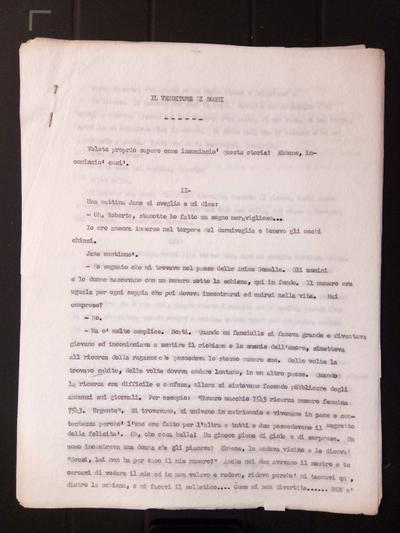
Volete proprio sapere come incominciò questa storia? Ebbene, incominciò così.
Una mattina Jane si sveglia e mi dice:
- Oh, Roberto, stanotte ho fatto un sogno meraviglioso...
Io ero ancora immerso nel torpore del dormiveglia e tenevo gli occhi chiusi.
Jane continuò.
- Ho sognato che mi trovavo nel paese delle Anime Gemelle. Gli uomini e le donne nascevano con un numero sotto la schiena, qui in fondo. Il numero era uguale per ogni coppia che poi doveva incontrarsi ed unirsi nella vita. Hai compreso?
- No.
- Ma è molto semplice. Senti. Quando un fanciullo si faceva grande e diventava giovane ed incominciava a sentire il richiamo e le smanie dell'amore, si metteva alla ricerca della ragazza che possedeva lo stesso numero suo. Delle volte la trovavo subito, delle volte doveva andare lontano, in un altro paese. Quando la ricerca era difficile e confusa, allora si aiutavano facendo pubblicare degli annunci sui giornali. Per esempio: "Numero maschio 7543 ricerca numero femmina 7543. Urgente." Si trovavano, si univano in matrimonio e vivevano in pace e contentezza perché l'uno era fatto per l'altra e tutti e due possedevano il segreto della felicità. Oh, che cosa bella! Un giuoco pieno di gioie e di sorprese. Un uomo incontrava una donna che gli piaceva? Ebbene, le andava vicino e le diceva: "Scusi, lei non ha per caso il mio numero?" Anche noi due avevamo il nostro e tu cercavi di vedere il mio ed io non volevo e ridevo, ridevo perché mi toccavi qui, dietro la schiena, e mi facevi il solletico..... Come mi non divertita...... NON è vero, Roberto, che questo è un sogno strano e delizioso? –
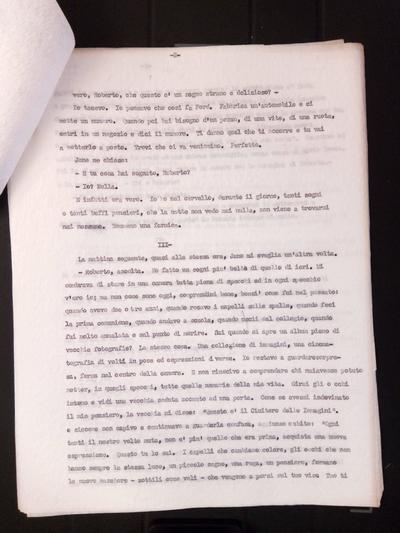
Io tacevo. Io pensavo che così fa Ford. Fabbrica un'automobile e ci mette un numero. Quando poi hai bisogno d'un pezzo, di una vite, di una ruota, entri in un negozio e dici il numero. Ti danno quel che ti occorre e tu vai a metterlo a posto. Trovi che ci va benissimo. Perfetto.
Jane me chiese:
– E tu cosa hai sognato, Roberto?
– Io? Nulla.
E infatti era vero. Io ho nel cervello, durante il giorno, tanti sogni o tanti buffi pensieri, che la notte non vedo mai nulla, non viene a trovarmi mai nessuno. Nemmeno una formica.
La mattina seguente, quasi alla stessa ora, Jane mi sveglia un'altra volta.
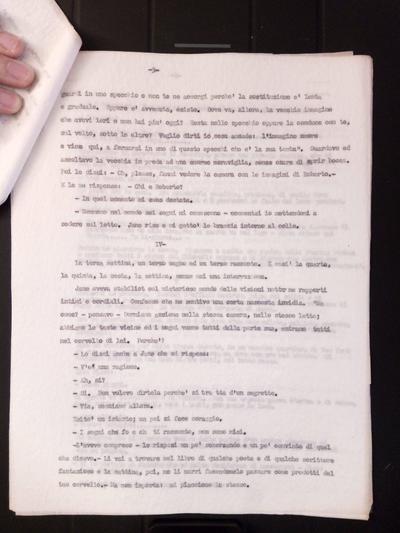
– Roberto, ascolta. Ho fatto un sogno più bello di quello di ieri. Mi sembrava di stare in una camera tutta piena di specchi ed in ogni specchio v'ero io; ma non come sono oggi, comprendimi bene, bensì come fui nel passato: quando avevo due o tre anni, quando recavo i capelli sulle spalle, quando feci la prima comunione, quando andavo a scuola, quando uscii dal collegio, quando fui molto ammalata e sul punto di morire. Sai quando si apre un album pieno di vecchie fotografie? La stessa cosa. Una collezione di immagini, una cinematografia di volti in pose ed espressioni diverse. Io restavo a guardare sorpresa, ferma nel centro della camera. E non riuscivo a comprendere chi mai avesse potuto metter, in quegli specchi, tutte quelle memorie della mia vita. Girai gli occhi intorno e vidi una vecchia seduta accanto ad una porta. Come se avessi indovinato il mio pensiero, la vecchia mi disse: "Questo è il Cimitero delle Immagini". E siccome non capivo e continuavo a guardarla confusa, aggiunse subito: "Ogni tanto il nostro volto muta, non è più quello che era prima, acquista una nuova espressione. Questo tu lo sai. I capelli che cambiano colore, gli occhi che non hanno sempre la stessa luce, un piccolo segno, una ruga, un pensiero, formano le nuove maschere – sottili come veli – che vengono a porsi sul tuo viso. Tuo ti guardi in uno specchio e non te ne accorgi perché la sostituzione è lenta e graduale. Eppure è avvenuta, esiste. Dove va, allora, la vecchia immagine che avevi ieri e non hai più oggi? Resta nello specchio oppure la conduce con te, sul volto, sotto le altre? Voglio dirti io cosa accade: l'immagine muore e viene qui, a fermarsi in uno di questi specchi che è la sua tomba. Guardavo ed ascoltavo la vecchia in preda ad una enorme meraviglia, senza osare di aprir bocca. Poi le dissi: — Oh, please, fammi vedere la camera con le immagini di Roberto. — E lei mi rispose: — Chi è Roberto?
— In quel momento mi sono destata.
— Nemmeno nel mondo dei sogni mi conoscono — commentai io mettendomi a sedere sul letto. Jane rise e mi gettò le braccia intorno al collo.
La terza mattina, un terzo sogno ed un terzo racconto. E così la quarta, la quinta, la sesta, la settima, senza mai una interruzione.
Jane aveva stabilito col misterioso mondo delle visioni notturne rapporti intimi e cordiali. Confesso che ne sentivo una certa nascosta invidia. Ma come? — pensavo — Dormiamo assieme nella stessa camera, nello stesso letto; abbiamo le teste vicine ed i sogni vanno tutti dalla parte sua, entrano tutti nel cervello di lei. Perché?
— Lo dissi anche a Jane che mi rispose:
— V'è una ragione.
— Ah, sì?
— Sì. Non volevo dirtela perché si tratta d'un segreto.
— Via, sentiamo allora.
Esitò un istante; ma poi si fece coraggio.
— I sogni che fo e che ti racconto, non sono miei.
— L'avevo compreso — le risposi un po' scherzando e un po' convinto di quel che dicevo. — Li vai a trovare nel libro di qualche poeta e di qualche scrittore fantasioso e la mattina, poi, me li narri facendomelo passare come prodotti del tuo cervello. — Ma non importa: mi piacciono lo stesso.
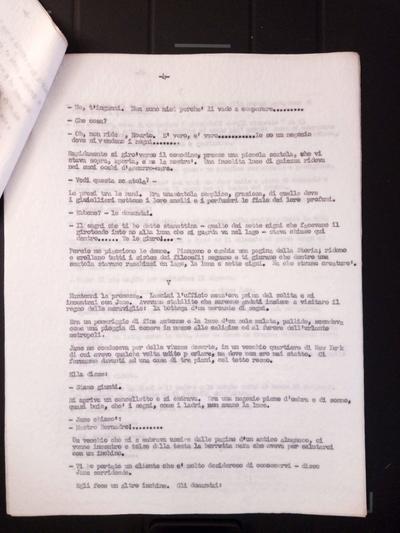
— No, t'inganni. Non sono miei perché li vado a comperare.........
— Che cosa?
— Oh, non ridere, Roberto. È vero, è vero........... Io so un negozio dove si vendono i sogni.........
Rapidamente si giro verso il comodino, prese una piccola scatola, che vi stava sopra, aperta, e me la mostro. Una insolita luce di gaiezza rideva nei suoi occhi d'azzurro-mare.
— Vedi questa scatola? —
La presi tra le mani. Era una scatola semplice, graziosa, di quelle dove i gioiellieri mettono i loro anelli e i profumi le fiale dei loro profumi.
— Ebbene? — le domandai.
— Il sogno che ti ho detto stamattina — quello dei sette cigni che facevano il girotondo intorno alla luna che si guarda va nel lago — stava chiuso qui dentro....... Te lo giuro!... —
Perciò mi piacciono le donne. Piangono e cambia una pagina della Storia; ridono e crollano tutti i sistemi dei filosofi; sognano e ti giurano che dentro una scatola stavano racchiusi un lago, la luna e sette cigni. Ma che strane creature!
Mantenni la promessa. Lasciai l'ufficio mezz'ora prima del solito e mi incontrai con Jane. Avevamo stabilito che saremmo andati insieme a visitare il regno delle meraviglie: la bottega d'un mercante di sogni.
Era un pomeriggio di fine autunno e la luce d'un sole malato, pallido, scendeva come una pioggia di cenere in mezzo alle caligine ed al furore dell'urlante metropoli.
Jane mi conduceva per delle viuzze deserte, in un vecchio quartiere di New York di cui avevo qualche volta udito parlare, ma dove non ero mai stato. Ci fermammo davanti ad una casa di tre piani, col tetto rosso.
Ella disse:
— Siamo giunti.
Si apriva un cancelletto e si entrava. Era una negozio pieno d'ombra e di sonno, quasi buio, che i sogni, come i ladri, non amano la luce.
— Jane chiamo:
— Mastro Bernardo!........
Un vecchio che mi sembrava uscire dalle pagine d'un antico almanacco, ci venne incontro e tolse dalla testa la berretta nera che aveva per salutarci con un inchino.
— Vi ho portato un cliente che è molto desideroso di conoscerVi — disse Jane sorridendo.
Egli fece un altro inchino. Gli domandai:
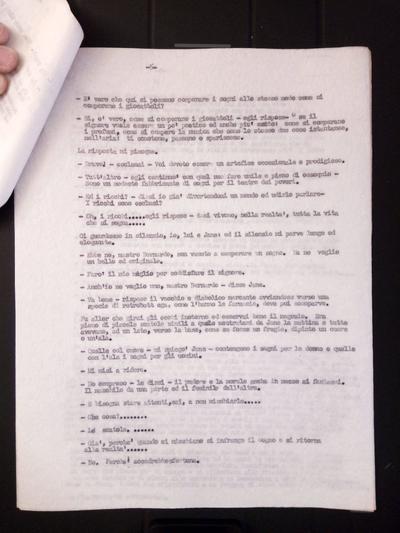
È vero che qui si possono comparare i sogni allo stesso modo come si comparano i giocattoli?
Sì, è vero, come si comparano i giocattoli – egli rispose – se il signore vuole essere un po’ poetico ed anche più esatto: come si comparano i profumi, come si compre la musica che sono le stesse due cose istantanee, nell’aria: ti scuotono, passano e spariscono.
La risposta mi piacque.
– Bravo! – esclamai – Voi dovete essere un artefice eccezionale e prodigioso.
– Tutt’altro – egli continuò con quel suo fare umile e pieno di ossequio – Sono un modesto fabbricante di sogni per il teatro dei poveri.
– Ed i ricchi? – dissi io già divertendomi un mondo ed udirlo parlare – I ricchi sono esclusi?
– Oh, i ricchi……egli rispose – Essi vivono, nella realtà, tutta la vita che si sogna……
Ci guardammo in silenzio, io, lui e Jane: ed il silenzio mi parve lungo ed eloquente.
– Ebbe ne, mastro Bernardo, son venuto a comparare un sogno. Ma ne voglio un bello ed originale.
– Farò il mio meglio per soddisfare il signore.
– Anch’io ne voglio uno, mastro Bernardo – disse Jane.
– Va bene – rispose il vecchio e diabolico mercante avviandosi verso una specie di retrobottega, come l’hanno le farmacie, dove poi scomparve.
Fu allor che girai gli occhi intorno ed osservai bene il negozio. Era pieno di piccole scatole simili a quelle mostratami da Jane la mattina e tutte avevano, ad un lato, verso la base, come se fosse un fregio, dipinto un cuore o un’ala.
– Quelle col cuore – mi spiegò Jane – contengono i sogni per le donne e quelle con l’ala i sogni per gli uomini.
Mi misi a ridere.
– Ho compreso – le dissi – il pudore e la morale anche in mezzo ai fantasmi. Il maschile da una parte ed il femminile dall’altra.
– E bisogna stare attenti, sai, a non mischiarle……
– Che cosa?………
– Le scatole. ……
– Già, perché quando si mischiano si infrange il sogno e si ritorna alla realtà………
– No. Perché accadrebbe sfortuna.
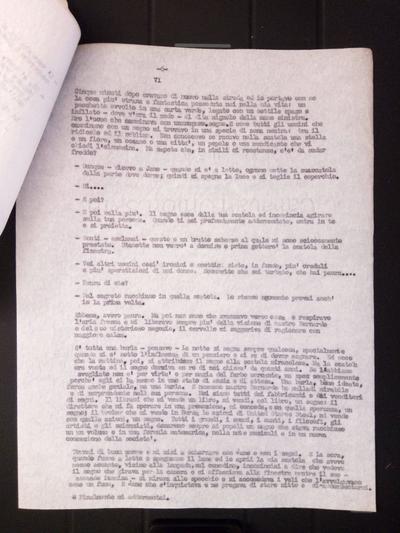
Cinque minuti dopo eravamo di nuovo nella strada ed io portavo con me la cosa più strana e fantastica posseduta mai nella mia vita: un pacchetto avvolto in una carta verde, legato con un sottile spago e infilato – dove v’era il nodo – al dito mignolo della mano sinistra. Ero l’uomo che camminava con un sogno. E come tutti gli uomini che camminano con un sogno mi trovavo in una specie di zona neutra: tra il ridicolo ed il sublime. Non conoscevo se recavo nella scatola una stella o un fiore, un oceano o una città, un popolo o una mendicante che vi chiedi l’elemosina. Ma sapete che, in simili ci restanze, c’è da sudar freddo?
– Dunque – dicevo a Jane – quando si è a letto, ognuno mette la scatola dalla parte dove dorme; quindi si spegne la luce e si toglie il coperchio.
– Sì....
– E poi?
– E poi nulla più. Il sogno esce dalla tua scatola ed incomincia agirare sulla tua persona. Quando ti sei profondamente addormentato, entra in te e si proietta.
– Senti – esclamai – questo è un brutto scherzo al quale mi sono scioccamente prestato. Stanotte non vorrò a dormire o prima getterò la scatola della finestra.
– Voi altri uomini così ironici e scettici siete, in fondo, più creduli e più superstiziosi di noi donne. Scommetto che sei turbato, che hai paura....
– Paura di che?
– Del segreto racchiuso in quella scatola. Io stesso sgomento provai anch’io la prima volta.
Ebbene, avevo paura. Ma poi man mano che avanzavo verso casa e respiravo l’aria fresca e mi liberavo sempre più dalla visione di mastro Bernardo e del suo misterioso negozio, il cervello mi suggeriva di ragionare con maggiore calma.
È tutta una burla – pensavo – La notte si sogna sempre qualcosa, specialmente quando si è sotto l’influenza di un pensiero e si sa di dover sognare. Ed ecco che la mattina, poi, si attribuisce il sogno alla scatola miracolosa. Ma la scatola era vuota ed il sogno dormiva en ro di noi chissà da quanti anni. Se l’abbiamo svegliato non è per virtù o per magia del furbo mercante, ma sper semplicemente perché egli ci ha messo in uno stato di ansia e di attesa. Una burla, bene ideata, forse anche geniale, ma una burla. E nemmeno mastro Bernardo ha milladi mirabile o di sorprendente nella sua persona. Noi siamo tutti dei fabbricanti e dei venditori di sogni. Il libraio che mi vende un libro, mi vendi, col libro, un sogno: il direttore che mi fa sperare in una promozione, mi concede, con quella speranza, un sogno; il broker che mi vende in Borsa le azioni di United States Steel, mi vende con quelle azioni, un sogno. Tutti i grandi, i santi, i filosofi, gli artisti e gli scienziati, donarono sempre ai popoli un sogno che stava racchiuso un un volume o in una formula matematica, nella note musicali o in un nuova concezione della società.
Tornai di buon umore e mi misi a scherzare con Jane e con i sogni. E la sera, quando fummo a letto e spogliammo il lume ed io aprii la mia scatola che avevo messo accanto, vicino alla lampada, sul comodino, incominciai a dire che vedevo il sogno che girava per la camera e si affacciava alla finestra mentre il suo – essendo femmina – si mirava allo specchio e si accomodava i veli che l’avvolgevano come un fumo. E Jane che s’inquietava e me pregava di stare zitto e di addormentarmi.
Finalmente mi addormentai.
Do you really want to know how this story began? Well, it began like this.
One morning Jane wakes up and says to me:
—Oh, Roberto, last night I had a wonderful dream...
I was still sunk in the torpor of half-sleep, my eyes closed.
Jane went on.
—I dreamed I was in the land of Soul Mates. Men and women were born with a number at the base of their backs, right down here. The number was the same for each pair destined to meet and be joined in life. Do you understand?
—No.
—But it’s very simple. Listen. When a boy grew up and became a young man and began to feel the call and the yearning of love, he would set out in search of the girl who bore the same number as his. Sometimes he found her at once; sometimes he had to travel far away, to another country. When the search was difficult and confusing, they helped themselves by placing advertisements in the newspapers. For example: “Male number 7543 seeks female number 7543. Urgent.” They found each other, were united in marriage, and lived in peace and contentment because each was made for the other and both possessed the secret of happiness. Oh, how lovely! A game full of joys and surprises. A man met a woman he liked? Well, he would go up to her and say: “Excuse me, by any chance do you have my number?” We had our own number too, and you kept trying to see mine, and I wouldn’t let you, and I laughed and laughed because you touched me here, at the base of my back, and tickled me..... How I enjoyed myself...... Isn’t
it true, Roberto, that this is a strange and delightful dream?—
I said nothing. I was thinking that this is what Ford does. He makes an automobile and puts a number on it. Then, when you need a part, a screw, a wheel, you go into a shop and give them the number. They give you what you need, and you go and put it in place. You find it fits perfectly. Perfect.
Jane asked me:
—And what did you dream, Roberto?
—Me? Nothing.
And in fact it was true. During the day I have so many dreams or so many comical thoughts in my head that at night I never see anything, no one ever comes to visit me. Not even an ant.
The following morning, at almost the same hour, Jane wakes me again.
—Roberto, listen. I had a dream even more beautiful than yesterday’s. I seemed to be in a room filled entirely with mirrors, and in every mirror I saw myself; but not as I am today, mind you, rather as I had been in the past: when I was two or three years old, when I wore my hair down to my shoulders, when I made my First Communion, when I went to school, when I left boarding school, when I was gravely ill and near death. You know what it’s like when you open an album full of old photographs? It was the same thing. A collection of images, a motion picture of faces in different poses and expressions. I stood gazing in astonishment, motionless in the center of the room. And I could not understand who could possibly have placed all those memories of my life inside those mirrors. I looked around and saw an old woman sitting beside a door. As though she had guessed my thoughts, the old woman said to me: “This is the Cemetery of Images.” And because I did not understand and continued to stare at her in bewilderment, she immediately added: “Every so often our face changes; it is no longer what it was before, but takes on a new expression. You know this. Hair that changes color, eyes that do not always hold the same light, a tiny mark, a wrinkle, a thought—all these form the new masks, as delicate as veils, that come to rest upon your face. You look at
yourself in a mirror and do not notice, because the change is slow and gradual. Yet it has taken place; it exists. Where, then, does the old image go—the one you had yesterday and no longer have today? Does it remain in the mirror, or do you carry it with you upon your face, beneath the others? I shall tell you what happens: the image dies and comes here to rest in one of these mirrors, which becomes its tomb.” I watched and listened to the old woman in utter amazement, not daring to open my mouth. Then I said to her: “Oh, please, show me the room with Roberto’s images.” And she answered: “Who is Roberto?”
—At that moment I awoke.
—Even in the world of dreams no one knows me—I remarked, sitting up in bed. Jane laughed and threw her arms around my neck.
The third morning, a third dream and a third tale. And so it went on the fourth, the fifth, the sixth, the seventh, without a single interruption.
Jane had established an intimate and cordial relationship with the mysterious world of nocturnal visions. I confess that I felt a certain secret envy. How could it be? I thought. We sleep together in the same room, in the same bed; our heads lie close together, yet all the dreams go to her side, all of them enter her mind. Why?
I said as much to Jane, and she replied:
—There is a reason.
—Oh, yes?
—Yes. I didn’t want to tell you because it’s a secret.
—Come, then, let’s hear it.
She hesitated for a moment, then summoned her courage.
—The dreams I have and tell you about are not mine.
—I had gathered as much—I replied, half joking and half convinced of what I was saying. —You find them in some poet’s or imaginative writer’s book, and then in the morning you tell them to me, passing them off as products of your own mind. But it doesn’t matter: I like them all the same.
—No, you’re mistaken. They’re not mine because I go and buy them.........
—What?
—Oh, don’t laugh, Roberto. It’s true, it’s true........... I know a shop where dreams are sold.........
She turned quickly toward the bedside table, took a little box that lay open upon it, and showed it to me. An unusual light of merriment sparkled in her sea-blue eyes.
—Do you see this box?—
I took it in my hands. It was a simple, pretty box, the kind in which jewelers place their rings and perfumers the vials of their perfumes.
—Well?—I asked her.
—The dream I told you about this morning—the one with the seven swans dancing in a ring around the moon as it gazed at itself in the lake—was shut inside here....... I swear it!...
That is why I like women. They weep, and a page of History is turned; they laugh, and every philosophical system comes tumbling down; they dream, and swear to you that a lake, the moon, and seven swans were enclosed inside a box. What strange creatures they are!
I kept my promise. I left the office half an hour earlier than usual and met Jane. We had agreed that we would go together to visit the realm of wonders: the shop of a merchant of dreams.
It was a late-autumn afternoon, and the light of a sickly, pallid sun fell like a rain of ashes amid the haze and fury of the howling metropolis.
Jane led me through deserted little streets in an old quarter of New York of which I had occasionally heard, but where I had never been. We stopped before a three-story house with a red roof.
She said:
—We have arrived.
A little gate opened, and we entered. It was a shop full of shadow and sleep, almost dark, for dreams, like thieves, do not love the light.
Jane called:
—Master Bernardo!........
An old man who seemed to have stepped out of the pages of an ancient almanac came toward us and removed the black cap from his head, greeting us with a bow.
—I have brought you a customer who is very eager to make your acquaintance—said Jane, smiling.
He bowed again. I asked him:
—Is it true that dreams can be bought here just as toys are bought?
—Yes, it is true, just as toys are bought—he replied—if the gentleman wishes to be somewhat poetic, and more precise as well: as perfumes are bought, as music is bought, for they are the same sort of fleeting things, suspended in the air: they stir you, pass, and disappear.
I liked his answer.
—Bravo!—I exclaimed. —You must be an extraordinary and prodigious craftsman.
—Quite the contrary—he continued, with his humble and deferential manner. —I am a modest maker of dreams for the theater of the poor.
—And the rich?—I said, already thoroughly enjoying the sound of him speaking. —Are the rich excluded?
—Oh, the rich......—he replied. —In reality, they live all the life that others dream of......
The three of us looked at one another in silence—I, he, and Jane—and the silence seemed long and eloquent to me.
—Well, then, Master Bernardo, I have come to buy a dream. But I want one that is beautiful and original.
—I shall do my best to satisfy the gentleman.
—I want one too, Master Bernardo—said Jane.
—Very well—replied the old and diabolical merchant, making his way toward a kind of back room, like those found in pharmacies, where he then disappeared.
It was then that I looked around and took a proper look at the shop. It was filled with little boxes similar to the one Jane had shown me that morning, and all of them bore, painted on one side near the base like a decorative emblem, either a heart or a wing.
—Those with the heart—Jane explained—contain dreams for women, and those with the wing contain dreams for men.
I began to laugh.
—I understand—I told her. —Modesty and morality even among phantoms. The masculine on one side and the feminine on the other.
—And you must be careful, you know, not to mix them up......
—What?.........
—The boxes.......
—Of course, because when they are mixed, the dream shatters and one returns to reality.........
—No. Because it would bring bad luck.
Five minutes later we were back on the street, and I carried with me the strangest and most fantastic thing I had ever possessed in my life: a package wrapped in green paper, tied with a thin string and looped—at the knot—around the little finger of my left hand. I was a man walking with a dream. And like all men who walk with a dream, I found myself in a kind of neutral zone: between the ridiculous and the sublime. I did not know whether I carried in that box a star or a flower, an ocean or a city, a people or a beggar woman asking you for alms. But do you know that, in such circumstances, one breaks out in a cold sweat?
“So,” I said to Jane, “when we go to bed, each of us puts the box on the side where we sleep; then we turn out the light and take off the lid.”
“Yes....”
“And then?”
“And then nothing more. The dream comes out of your box and begins to circle around you. When you have fallen deeply asleep, it enters you and projects itself.”
“Listen,” I exclaimed, “this is a nasty joke that I have foolishly allowed myself to be drawn into. Tonight I won’t go to sleep—or else I’ll throw the box out the window first.”
“You men, so ironic and skeptical, are really more credulous and superstitious than we women are. I’ll wager you’re troubled, that you’re afraid....”
“Afraid of what?”
“Of the secret locked inside that box. I felt the same dread myself the first time.”
Well, I was afraid. But then, as I made my way home, breathing the fresh air and freeing myself more and more from the vision of Master Bernardo and his mysterious shop, my mind urged me to reason more calmly.
It is all a joke, I thought. At night we always dream of something, especially when we are under the influence of a thought and know that we are supposed to dream. And then, in the morning, we attribute the dream to the miraculous box. But the box was empty, and the dream had been sleeping inside us for who knows how many years. If we awakened it, it was not through any power or magic of that cunning merchant, but simply because he had put us in a state of anxiety and expectation. A joke, cleverly devised, perhaps even ingenious, but a joke nonetheless. Nor is there anything marvelous or surprising about Master Bernardo himself. We are all makers and sellers of dreams. The bookseller who sells me a book sells me, along with that book, a dream; the manager who lets me hope for a promotion grants me, with that hope, a dream; the broker who sells me shares of United States Steel on the stock exchange sells me, with those shares, a dream. All the great men, the saints, philosophers, artists, and scientists have always given the people a dream enclosed in a volume or a mathematical formula, in musical notes or in a new conception of society.
My good humor returned, and I began joking with Jane and about the dreams. And that evening, when we were in bed and had put out the lamp, and I opened my box, which I had placed beside me near the lamp on the nightstand, I began saying that I could see the dream circling the room and peering out the window, while hers—being female—admired itself in the mirror and adjusted the veils that swathed it like smoke. And Jane grew vexed and begged me to be quiet and go to sleep.
At last I fell asleep.