I Manoscritti / Original Typescripts · 6 fogli
Page 1
Page 2
Page 3
Page 4
Page 5
Page 6
This nonfiction, essayistic travel sketch (framed as advice to a “you” arriving in New York) describes where to find calm in the city after sunset. The first refuge is the bridges, presented as the only places that still preserve “a certain composure,” protected from the crush of crowds and allowing the “rhythmic movement of a walk,” even with cars passing. The narrator inventories New York’s many bridges and lingers on two: the Brooklyn Bridge, celebrated by postcards, popular serial novels, and poets as a symbol of American dynamism, and lovingly painted in many lights by the artist Peppino Stella. Its grandeur is shadowed by a grim origin story: the chief engineer dies of tetanus after a fall; his son, who continues the work, is paralyzed and directs construction from his window; six days after the 1883 opening, a woman falls on the steps, panic spreads, and twelve people die in the stampede. The George Washington Bridge is then rendered as a gigantic silver arc over the Hudson, making pedestrians feel like ants and airplanes like flies.
After bridges, the narrator recommends churches and nearby convent retreats as crowded sanctuaries from modern noise (radio, phonograph, telephone, television), noting landmarks including St. Patrick’s Cathedral and the shrine of Italian immigrant saint Francesca Cabrini, before briefly listing theaters, clubs, sports, and concert halls as other evening choices.
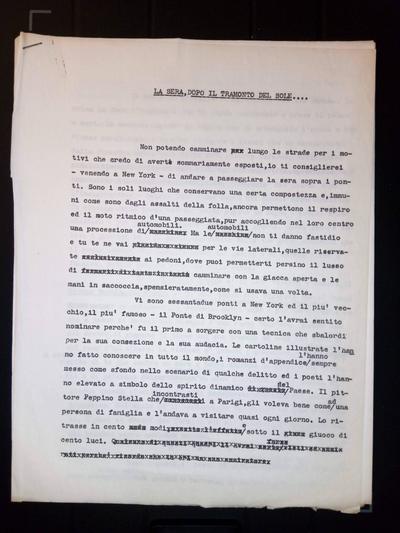
Non potendo camminare lungo le strade per i motivi che credo di averti sommariamente esposti, io ti consiglierei - venendo a New York - di andare a passeggiare la sera sopra i ponti. Sono i soli luoghi che conservano una certa compostezza e, immuni come sono dagli assalti della folla, ancora permettono il respiro ed il moto ritmico d'una passeggiata, pur accogliendo nel loro centro una processione di automobili. Ma le automobili non ti danno fastidio e tu te ne vai per le vie laterali, quelle riservate ai pedoni, dove puoi permetterti persino il lusso di camminare con la giacca aperta e le mani in saccoccia, spensieratamente, come si usava una volta.
Vi sono sessantadue ponti a New York ed il più vecchio, il più famoso - il Ponte di Brooklyn - certo l'avrai sentito nominare perché fu il primo a sorgere con una tecnica che sbalordì per la sua concezione e la sua audacia. Le cartoline illustrate l'hanno fatto conoscere in tutto il mondo, i romanzi d'appendice l'hanno sempre messo come sfondo nello scenario di qualche delitto ed i poeti l'hanno elevato a simbolo dello spirito dinamico del Paese. Il pittore Peppino Stella che inconstrasti a Parigi, gli voleva bene come ad una persona di famiglia e l'andava a visitare quasi ogni giorno. Lo ritrasse in cento modi, sotto il giuoco di cento luci.
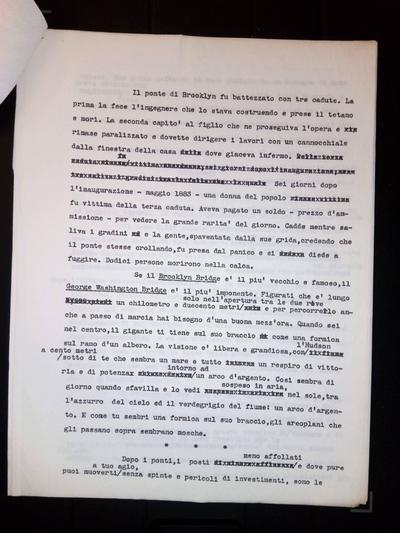
Il ponte di Brooklyn fu battezzato con tre cadute. La prima la fece l'ingegnere che lo stava costruendo e prese il tetano e morì. La seconda capitò al figlio che ne proseguiva l'opera e rimase paralizzato e dovette dirigere i lavori con un cannocchiale dalla finestra della casa dove giaceva infermo. Sei giorni dopo l'inaugurazione – maggio 1883 – una donna del popolo fu vittima della terza caduta. Aveva pagato un soldo – prezzo d'ammissione – per vedere la grande rarità del giorno. Cadde mentre saliva i gradini e la gente, spaventata dalla sue grida, credendo che il ponte stesse crollando, fu presa dal panico e si diede a fuggire. Dodici persone morirono nella calca.
Se il Brooklyn Bridge è il più vecchio e famoso, il George Washington Bridge è il più imponente. Figurati che è lungo un chilometro e duecento metri solo nell'apertura tra le due rive e per percorrerlo anche a passo di marcia hai bisogno d'una buona mezz'ora. Quando sei nel centro, il gigante ti tiene sul suo braccio come una formica sul ramo d'un albero. La visione è libera e grandiosa, con l'Hudson a cento metri sotto di te che sembra un mare e tutto un respiro di vittoria e di potenza intorno ad un arco d'argento. Così sembra di giorno quando sfavilla e lo vedi sospeso in aria, nel sole, tra l'azzurro del cielo ed il verdegrigio del fiume: un arco d'argento: un arco d'argento. E come tu sembri una formica sul suo braccio, gli aereoplani che gli passano sopra sembrano mosche.
*
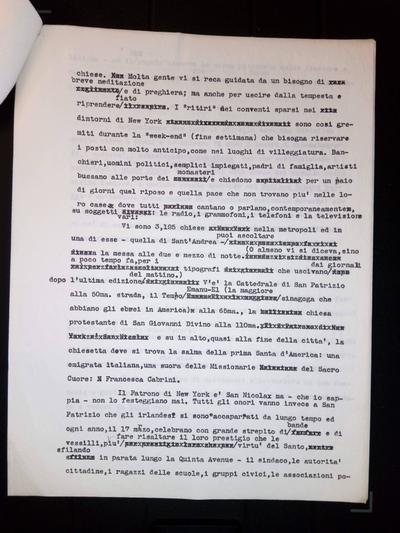
Dopo i ponti, i posti meno affollati e dove pure puoi muoverti/senza spinte e pericoli di investimenti, sono le chiese. Molta gente vi si reca guidata da un bisogno di breve meditazione e di preghiera; ma anche per uscire dalla tempesta e riprendere fiato. I "ritiri" dei conventi sparsi nei dintorni di New York sono così gremiti durante la "week-end" (fine settimana) che bisogna riservare i posti con molto anticipo, come nei luoghi di villeggiatura. Banchieri, uomini politici, semplici impiegati, padri di famiglia, artisti monasteri bussano alle porte dei monasteri e chiedono per un paio di giorni quel riposo e quella pace che non trovano più nelle loro case; dove tutti cantano o parlano, contemporaneamente, su soggetti vari: le radio, i grammofoni, i telefoni e la televisione.
Vi sono 3,125 chiese nella metropoli ed in una di esse - quella di Sant'Andrea puoi ascoltare la messa alle due e mezzo di notte. (O almeno vi si diceva, sino a poco tempo fa, per i tipografi che uscivano dopo l'ultima edizione.) V'è la Cattedrale di San Patrizio alla 50ma strada, il Tempio Emanu-El (la maggiore sinagoga che abbiano gli ebrei in America); alla 65ma., la chiesa protestante di San Giovanni Divino alla 110ma. E su in alto, quasi alla fine della città, la chiesetta dove si trova la salma della prima Santa d'America: una emigrata italiana, una suora delle Missionarie del Sacro Cuore: Francesca Cabrini.
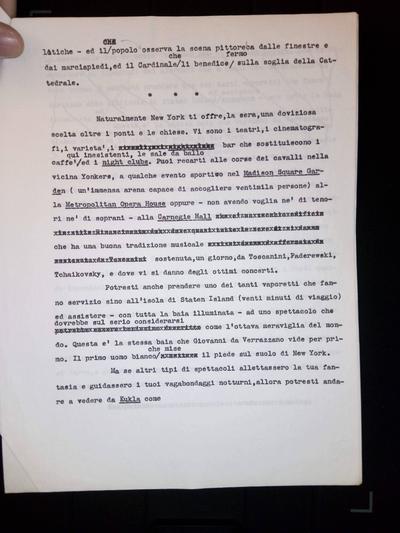
Il Patrono di New York è San Nicola ma - che io sappia - non lo festeggiano mai. Tutti gli onori vanno invece a San Patrizio che gli irlandesi si sono accaparrati da lungo tempo ed ogni anno, il 17 marzo, celebrano con grande strepito di bande e di vessilli, più fare risaltare il loro prestigio che le virtù del Santo, sfilando in parata lungo la Quinta Avenue - il sindaco, le autorità cittadine, i ragazzi delle scuole, i gruppi civici, le associazioni po litiche - ed il popolo che osserva la scena pittoresca dalle finestre e dai marciapiedi, ed il Cardinale che li benedice fermo sulla soglia della Cattedrale.
*
Naturalmente New York ti offre, la sera, una doviziosa scelta oltre i ponti e le chiese. Vi sono i teatri, i cinematografi, i varietà, i bar che sostituiscono i caffè qui inesistenti, le sale da ballo e i night club. Puoi recarti alle corse dei cavalli nella vicina Yonkers, a qualche evento sportivo nel Madison Square Garden (un'immensa arena capace di accogliere ventimila persone), alla Metropolitan Opera House oppure, non avendo voglia né di tenori né di soprani, alla Carnegie Hall, che ha una buona tradizione musicale sostenuta, un giorno, da Toscanini, Paderewski, Tchaikovsky, e dove si danno degli ottimi concerti.
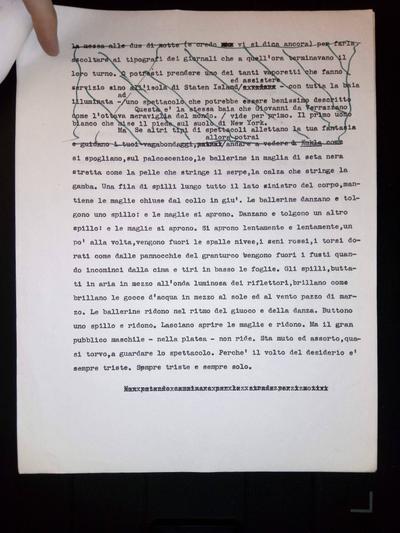
Potresti anche prendere uno dei tanti vaporetti che fanno servizio sino all'isola di Staten Island (venti minuti di viaggio) ed assistere – con tutta la baia illuminata – ad uno spettacolo che dovrebbe sul serio considerarsi come l'ottava meraviglia del mondo. Questa è la stessa baia che Giovanni da Verrazzano vide per primo. Il primo uomo bianco che mise il piede sul suolo di New York.
Ma se altri tipi di spettacoli allettassero la tua fantasia e guidassero I tuoi vagabondaggi notturni, allora potresti andare a vedere da Kula come si spogliano, sul palcoscenico, le ballerine in maglia di seta nera stretta come la pelle che stringe il serpe, la calza che stringe la gamba. Una fila di spilli lungo tutto il lato sinistro del corpo, mantiene le maglie chiuse dal collo in giù. Le ballerine danzano e tolgono uno spillo: e le maglie si aprono. Danzano e tolgono un altro spillo: e le maglie si aprono. Si aprono lentamente e lentamente, un po' alla volta, vengono fuori le spalle nivee, i seni rosei, i torsi dorati come dalle pannocchie del granturco vengono fuori i fusti quando incominci dalla cima e tiri in basso le foglie. Gli spilli, buttati in aria in mezzo all'onda luminosa dei riflettori, brillano come brillano le gocce d'acqua in mezzo al sole ed al vento pazzo di marzo. Le ballerine ridono nel ritmo del giuoco e della danza. Buttono uno spillo e ridono. Lasciano aprire le maglie e ridono. Ma il gran pubblico maschile - nella platea - non ride. Sta muto ed assorto, quasi torvo, a guardare lo spettacolo. Perché il volto del desiderio è sempre triste. Sempre triste e sempre solo.
*
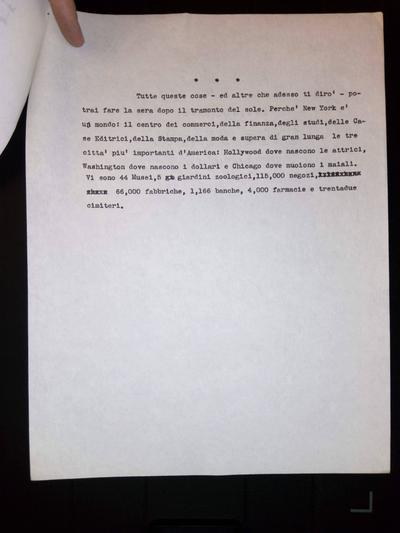
Tutte queste cose - ed altre che adesso ti dirò - potrai fare la sera dopo il tramonto del sole. Perché New York è un mondo: il centro dei commerci, della finanza, degli studi, delle Case Editrici, della Stampa, della moda e supera di gran lunga le tre città più importanti d'America: Hollywood dove nascono le attrici, Washington dove nascono i dollari e Chicago dove muoiono i malati. Vi sono 44 Musei, 5 giardini zoologici, 115,000 negozi, 66,000 fabbriche, 1,166 banche, 4,000 farmacie e trentadue cimiteri.
Since it is impossible to walk along the streets, for the reasons I believe I have briefly explained to you, I would advise you—when you come to New York—to take your evening walks across the bridges. They are the only places that retain a certain composure and, immune as they are to the assaults of the crowd, still allow you to breathe and to settle into the steady rhythm of a stroll, even though a procession of automobiles passes down their middle. But the automobiles do not bother you, and you walk along the side paths reserved for pedestrians, where you can even afford the luxury of strolling with your jacket open and your hands in your pockets, carefree, as people once used to do.
There are sixty-two bridges in New York, and the oldest, the most famous—the Brooklyn Bridge—you will certainly have heard of, because it was the first to be built with an engineering technique that astonished everyone by the daring of its conception. Picture postcards have made it known throughout the world, serialized novels have always used it as the backdrop for some crime, and poets have elevated it into a symbol of the country’s dynamic spirit. The painter Peppino Stella, whom you met in Paris, loved it like a member of the family and went to visit it almost every day. He portrayed it in a hundred ways, beneath the play of a hundred lights.
The Brooklyn Bridge was christened by three falls. The first was that of the engineer who was building it: he contracted tetanus and died. The second befell his son, who carried on the work: he was left paralyzed and had to direct construction through a telescope from the window of the house where he lay ill. Six days after the inauguration—May 1883—a working-class woman became the victim of the third fall. She had paid a penny—the price of admission—to see the great wonder of the day. She fell while climbing the steps, and the people, frightened by her screams and believing that the bridge was collapsing, panicked and began to flee. Twelve people died in the crush.
If the Brooklyn Bridge is the oldest and most famous, the George Washington Bridge is the most imposing. Just imagine: the span between its two shores alone is nearly three-quarters of a mile long, and even at a marching pace you need a good half-hour to cross it. When you reach the middle, the giant holds you upon its arm like an ant on the branch of a tree. The view is open and magnificent, with the Hudson a hundred yards below you, looking like a sea, and all around an exhilarating sense of triumph and power surrounding an arch of silver. That is how it looks by day, when it sparkles and you see it suspended in the air, in the sunlight, between the blue of the sky and the gray-green of the river: an arch of silver: an arch of silver. And just as you seem an ant upon its arm, the airplanes passing overhead seem like flies.
*
After the bridges, the least crowded places, where you can still move about without being jostled or running the risk of being struck down, are the
churches. Many people go there driven by a need for a brief spell of meditation and prayer; but also to escape the storm and catch their breath. The monastic “retreats” scattered around the outskirts of New York are so crowded during the “week-end” that places must be reserved well in advance, as at holiday resorts. Bankers, politicians, ordinary clerks, fathers of families, artists knock at the doors of the monasteries and ask for a couple of days of the rest and peace they can no longer find in their own homes, where everyone sings or speaks, simultaneously, on various subjects: the radios, the phonographs, the telephones, and the television.
There are 3,125 churches in the metropolis, and in one of them—St. Andrew’s—you can hear Mass at half past two in the morning. (Or at least it was said there until recently, for the printers coming off work after the final edition.) There is St. Patrick’s Cathedral on 50th Street; Temple Emanu-El, the largest synagogue the Jews have in America, on 65th; and the Protestant Cathedral of St. John the Divine on 110th. And far uptown, almost at the end of the city, stands the little church where the body of America’s first saint lies: an Italian immigrant, a nun of the Missionary Sisters of the Sacred Heart, Frances Cabrini.
The patron saint of New York is St. Nicholas, but—as far as I know—they never celebrate him. Instead, all honors go to St. Patrick, whom the Irish laid claim to long ago. Every year, on March 17, they celebrate him amid a great clamor of bands and banners, more to display their own prestige than the virtues of the saint, parading along Fifth Avenue—the mayor, the city authorities, the schoolchildren, the civic groups, the political associa-
tions—and the people watching the picturesque spectacle from windows and sidewalks, and the Cardinal blessing them as he stands upon the threshold of the Cathedral.
*
Naturally, in the evening New York offers you a wealth of choices besides bridges and churches. There are theaters, movie houses, variety shows, bars—which take the place of the cafés that do not exist here—dance halls, and nightclubs. You can go to the horse races in nearby Yonkers, to some sporting event at Madison Square Garden—an immense arena capable of holding twenty thousand people—to the Metropolitan Opera House or, if you are in the mood for neither tenors nor sopranos, to Carnegie Hall, which has a fine musical tradition once upheld by Toscanini, Paderewski, and Tchaikovsky, and where excellent concerts are given.
You might also take one of the many ferries that run to Staten Island—a twenty-minute journey—and, with the whole bay illuminated, behold a spectacle that should truly be considered the eighth wonder of the world. This is the same bay Giovanni da Verrazzano first saw. The first white man to set foot on the soil of New York.
But if other kinds of spectacles should entice your imagination and guide your nocturnal wanderings, then you might go to Kula’s to watch
the dancers undress upon the stage, clad in black silk tights as close-fitting as the skin around a serpent, as a stocking around a leg. A row of pins running all along the left side of the body holds the tights closed from the neck down. The dancers dance and remove a pin: and the tights open. They dance and remove another pin: and the tights open. They open slowly, and slowly, little by little, the snowy shoulders, the rosy breasts, the golden torsos emerge, as the stalk emerges from an ear of corn when you begin at the top and pull the leaves downward. The pins, tossed into the air amid the bright waves of the spotlights, glitter as drops of water glitter in the sun and the mad March wind. The dancers laugh to the rhythm of the game and the dance. They toss away a pin and laugh. They let the tights fall open and laugh. But the great male audience—in the orchestra seats—does not laugh. It sits silent and absorbed, almost grim, watching the spectacle. For the face of desire is always sad. Always sad and always alone.
*
All these things—and others I shall now tell you about—you will be able to do in the evening, after the sun has set. For New York is a world: the center of commerce, finance, learning, publishing houses, the Press, and fashion, and it far surpasses the three most important cities in America: Hollywood, where actresses are born; Washington, where dollars are born; and Chicago, where the sick die. There are 44 museums, 5 zoological gardens, 115,000 shops, 66,000 factories, 1,166 banks, 4,000 drugstores, and thirty-two cemeteries.