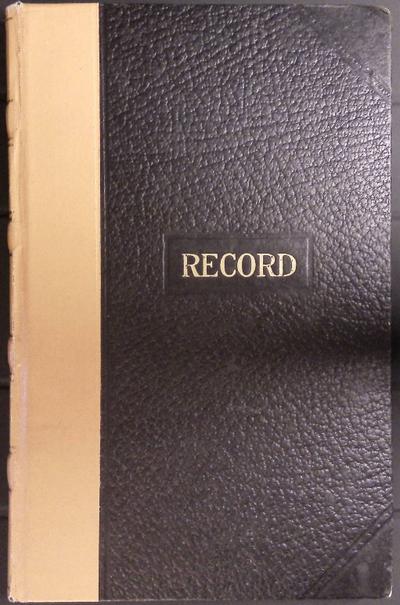
This is Franco Lalli's personal notebook—his actual taccuino, the same word that titles his newspaper column ("Taccuino di Franco Lalli")—kept around 1940. Handwritten in Italian, it gathers private meditations rather than finished work: prose-poems, spiritual reflection, and pointed cultural commentary set down as they came to him.
Much of it circles Saint Francis of Assisi, evoked through emblematic episodes—San Damiano, the break with his father, the meeting with the Sultan of Egypt, the ecstasy of La Verna—and through his communion with creatures (he speaks even to the ants), amid a mystical nature of "holy air" and a velvet sky strewn with trembling golden lilies. One passage dates its composition to a deserted beach near Rome in the summer of 1939, and records that the fascist secret police were opening his correspondence—surveillance that likely dates to his years with La Gazzetta del Popolo in Turin. From there the notebook turns polemical, arguing that modern "pagan" despair springs from abandoning the life of the Spirit—religion, philosophy, moral principle—for machines and mass propaganda, and calling instead for a "propaganda of the Spirit" carried by artists and a renewed religious language. It closes on aphorisms about freedom, conscience, and peace as inner states, threaded with recurring pastoral images of wind, snow, shepherds, and the poor who sleep more peacefully than kings.
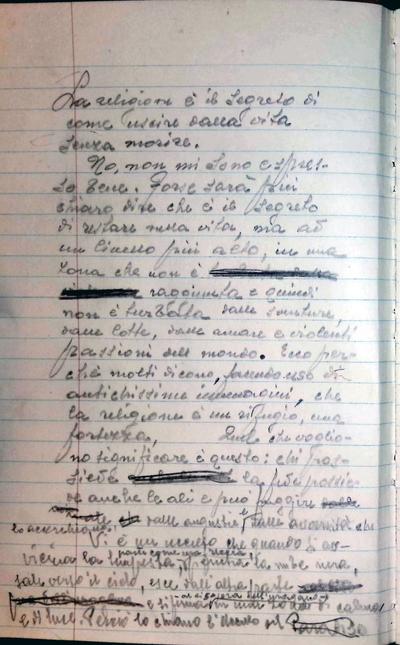
La religione è il segreto di come uscire dalla vita senza morire.
No, non mi sono espresso bene. Forse sarà più chiaro dire che è il segreto di restare nella vita, ma ad un livello più alto, in una zona che non è [deleted] raggiunta e quindi non è turbata dalle [seccature?], dalle lotte, dalle amare e violente passioni del mondo. Ecco perché molti dicono, facendo uso di antichissime immagini, che la religione è un rifugio, una fortezza. Quello che vogliono significare è questo: chi possiede la fede possiede anche le ali e può fuggire [deleted] dalle angustie e dalle avversità che lo accerchiano.
Vi è un uccello che quando si avvicina la tempesta, parte come una [?] la nube nera, spiega le sue ali, sale verso il cielo, esce dall'altra parte [deleted] e si ferma al di sopra dell'uragano in un luogo di calma e di lume. Perciò lo chiamo l'Uccello del [deleted]
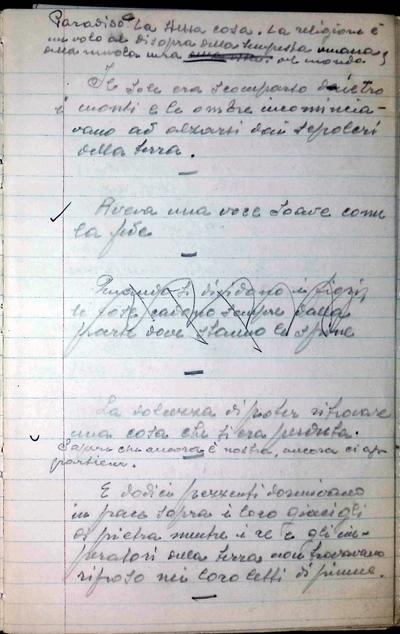
Paradiso. La stessa cosa. La religione è un volo al di sopra della tempesta umana, della nuvola nera del mondo.
Il sole era scomparso dietro i monti e le ombre incominciavano ad alzarsi dai sepolcri della terra.
Aveva una voce soave come la fede.
[deleted]
La dolcezza d’poter ritrovare una cosa che si era perduta. Sapere che ancora è nostra, ancora ci appartiene.
E dodici pezzenti dormivano in pace sopra i loro giacigli di pietra mentre i re e gli imperatori della terra non trovavano riposo nei loro letti di piume.
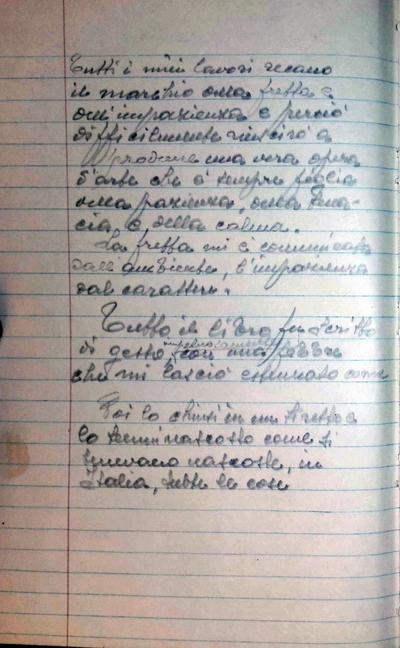
Tutti i miei lavori recano il marchio della fretta e dell’impazienza e perciò difficilmente riuscirò a produrre una vera opera d’arte che è sempre figlia della pazienza, della tenacia e della calma. La fretta mi è comunicata dall’ambiente, l’impazienza dal carattere.
Tutto il libro fu scritto di getto, impazientemente, con una febbre che mi lasciò estenuato come
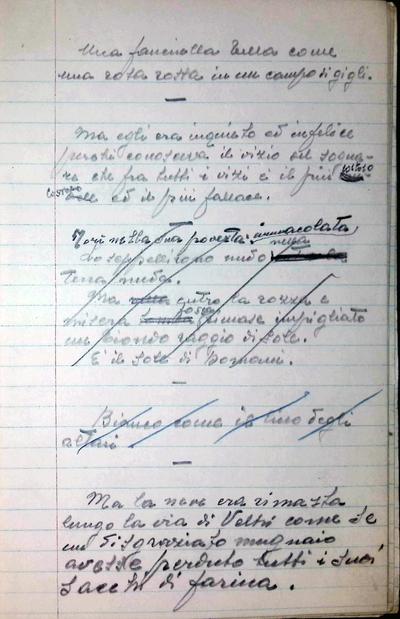
Poi lo chiusi in un [libretto?] e lo tenni nascosto come si facevano nascoste, in Italia, tutte le cose Una fanciulla bella come una rosa rossa in un campo di gigli.
—
Ma egli era inquieto ed infelice perché conosceva il vizio del sognare che fra tutti i vizi è il più costoso ed il più fatale.
—
[Deleted: Morì nella sua povertà immacolata,
Lo seppellirono nudo nella Terra nuda.
Ma sotto la rozza e misera fossa rimase impigliato un biondo raggio di sole.
È il sole di domani.]
—
[Deleted: Bianco come il lino degli altari.]
—
Ma la neve era rimasta lungo la via di Voltri come se un disgraziato mugnaio avesse perduto tutti i suoi sacchi di farina.
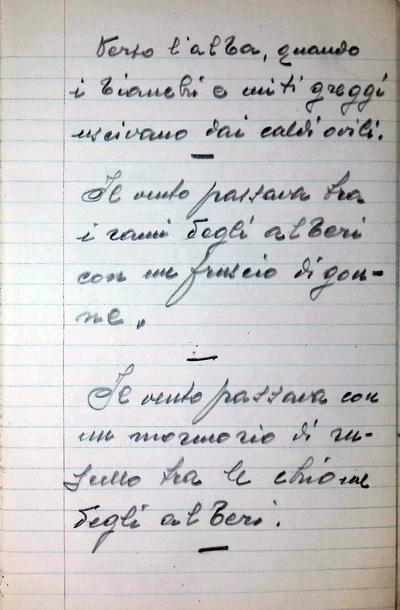
Verso l'alba, quando i bianchi e miti greggi uscivano dai caldi ovili.
—
Il vento passava fra i rami degli alberi con un fruscio di gonne.
—
Il vento passava con un mormorio di ruscello fra le chiome degli alberi.
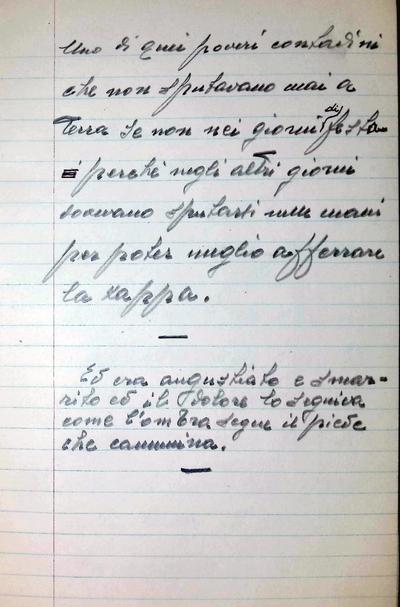
Uno di quei poveri contadini che non sfruttavano mai la Terra se non nei giorni di festa perché negli altri giorni dovevano sputarsi nelle mani per poter meglio afferrare la zappa.
—
Ei era angustiato e smarrito ed il dolore lo seguiva come l'ombra segue il piede che cammina.
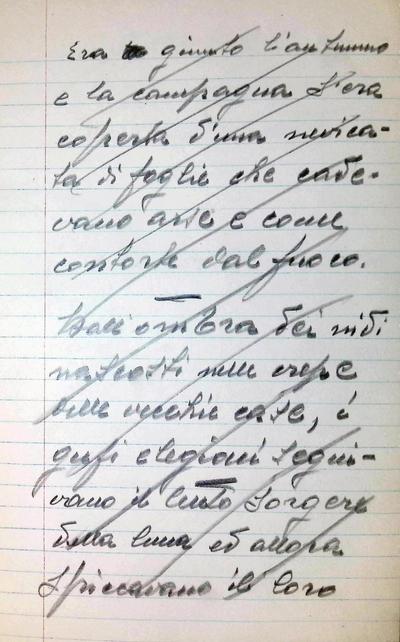
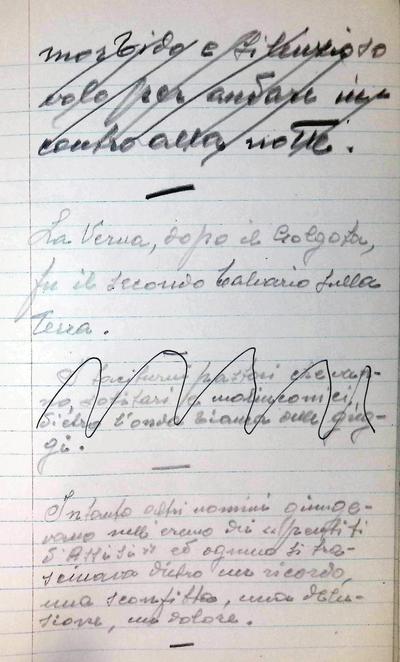
[Deleted: Era giunto l'autunno e la campagna s'era
coperta d'una nevicata d'foglie che cadevano arse e come contorte dal fuoco.
—
Dall'ombra dei nidi nascosti nelle crepe delle vecchie case, i gufi elegioni seguivano il lento sorgere della luna ed allora spiccavano il loro morbido e delizioso volo per andare incontro alla notte.]
—
La Verna, dopo il Golgota, fu il secondo Calvario sulla Terra.
—
[deleted: I [?] pastori che vanno, solitari e malinconici dietro l'onda bianca delle greggi.]
—
Intanto altri uomini giungevano nell'eremo dei «penitenti d'Assisi» ed ognuno si trascinava dietro un ricordo, una sconfitta, una delusione, un dolore.
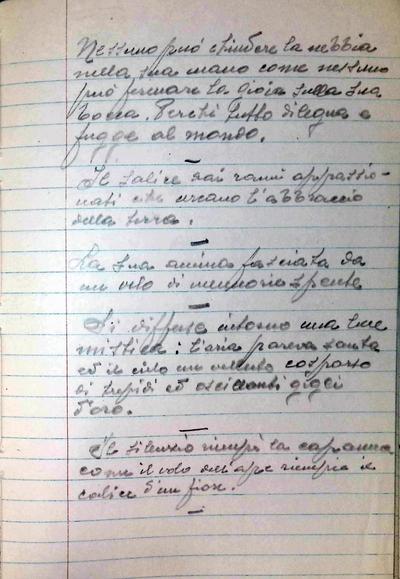
Nessuno può chiudere la nebbia nella sua mano come nessuno può fermare la gioia sulla tua bocca. Perché tutto dilegua e fugge al mondo.
—
Il salire dai rami appassionati che cercano l'abbraccio della terra.
—
La tua anima fasciata da un velo di memorie spente.
—
Si diffuse intorno una luce mistica: l'aria pareva santa ed il cielo un velluto coperto di trepidi ed oscillanti gigli d'oro.
—
Il silenzio riempì la capanna come il volo dell'ape riempie il calice d'un fiore.
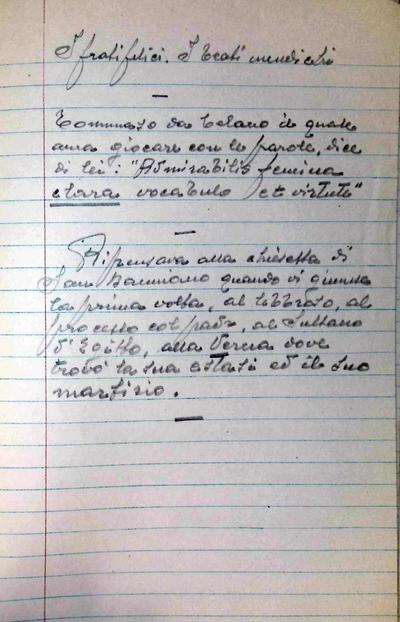
I frati felici. I beati [mendicati?]
—
Tommaso da Celano il quale ama giocare con le parole, dice di lei: "Admirabilis femina clara vocabulo et virtute"
—
Ripensava alla chiesetta di San Damiano quando vi giunse la prima volta, al labbrato, al processo col padre, al Sultano d'Egitto, alla Verna dove trovò la sua estasi ed il suo martirio.
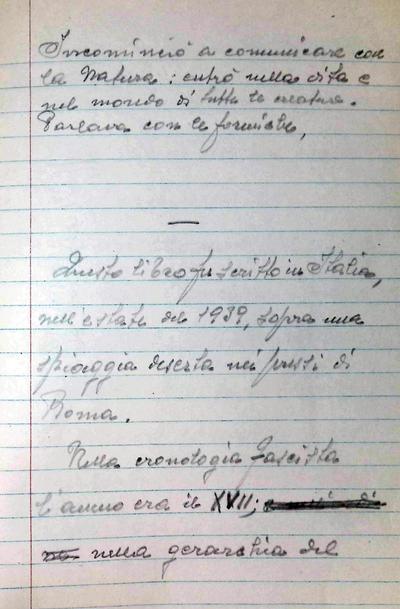
Incominciò a comunicare con la Natura; entrò nella vita e nel mondo di tutte le creature. Parlava con le formiche,
—
Questo libro fu scritto in Italia, nell’estate del 1939, sopra una spiaggia deserta nei pressi di Roma.
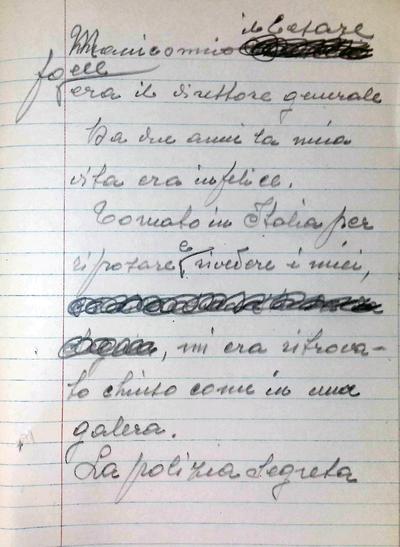
Nella cronologia fascista l’anno era il XVII; [deleted] nella gerarchia del Manicomio di Cesare, folle era il direttore generale
Da due anni la mia vita era infelice.
Tornato in Italia per riposare e rivedere i miei [deleted], mi ero ritrovato chiuso come in una galera.
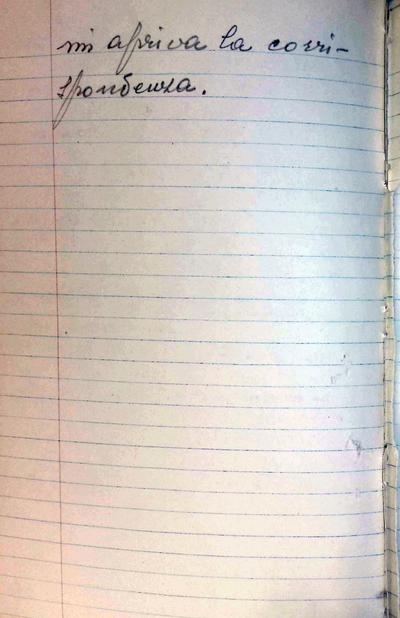
La polizia segreta mi apriva la corrispondenza.
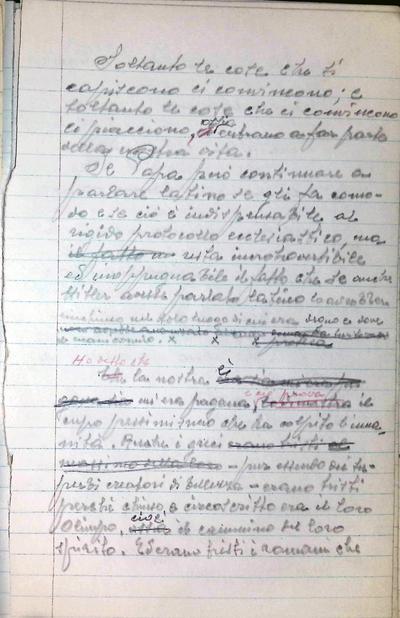
Soltanto le cose che si capiscono ci convincono; e soltanto le cose che ci convincono ci piacciono, ossia entrano a far parte della nostra vita.
Il Papa può continuare a parlare latino se gli fa comodo e se ciò è indispensabile al rigido protocollo ecclesiastico, ma [deleted: il fatto] resta inconvertibile ed inoppugnabile il fatto che, se anche Hitler avesse parlato latino, lo avrebbe rinchiuso nel solo luogo di cui era degno e [deleted: dove avrebbe trovato il suo degno compagno di sventura]: il manicomio.
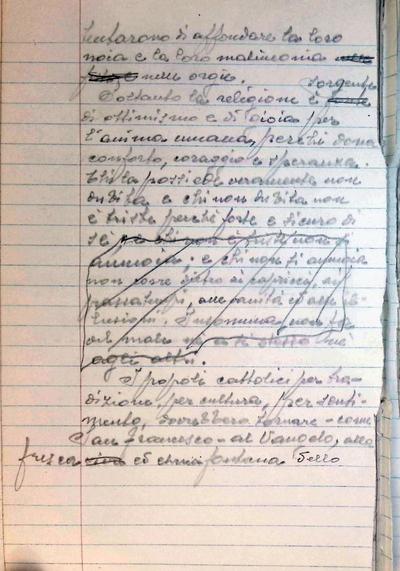
Ho detto che la nostra è [deleted] un'era pagana, e ciò prova il tempo pessimismo che ha colpito l'umanità. Anche i greci [deleted] pur essendo dei superbi creatori di bellezza – erano tristi perché chiuso e circoscritto era il loro Olimpo, cioè il [?] del loro spirito. Ed erano tristi i Romani che cercarono di affondare la loro noia e la loro malinconia nelle orgie.
Soltanto la religione è sorgente di ottimismo e di gioia per l’anima umana, perché dona conforto, coraggio e speranza. Chi la possiede veramente non dubita e chi non dubita non è triste perché forte e sicuro di sé. [deleted: e chi non è triste non si annoia; e chi non si annoia non corre dietro ai capricci, ai passatempi, alle vanità, ed alle illusioni. Insomma, non fa del male né a sé stesso né agli altri.]
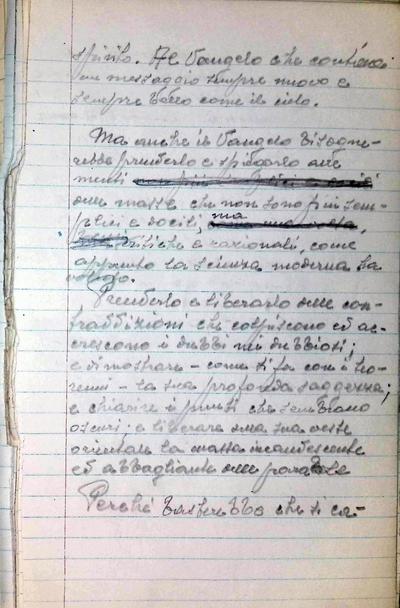
I popoli cattolici per tradizione, per cultura, per sentimento dovrebbero tornare – come San Francesco – al Vangelo, alla fresca [deleted] ed eterna fontana dello spirito. Al Vangelo che contiene un messaggio sempre nuovo e sempre bello come il cielo.
Ma anche il Vangelo bisognerebbe prenderlo e spiegarlo alle menti [deleted: scientifiche, unreadable] delle masse che non sono più semplici e docili, ma scientifiche e razionali, come appunto la scienza moderna ha voluto.
Prenderlo e liberarlo dalle contraddizioni che colpiscono ed accrescono i dubbi dei dubbiosi; e dimostrare – come si fa con i fenomeni – la sua profonda saggezza; e chiarire i punti che sembrano oscuri e liberare dalla sua veste originale la massa incandescente ed abbagliante delle parabole.
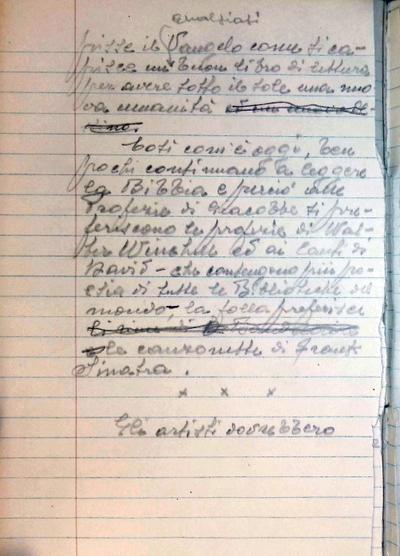
Perché basterebbe che si capisse il Vangelo come si capisce un buon libro di lettura, per avere sotto il sole una nuova umanità.
Così com'è oggi, ben pochi continuano a leggere la Bibbia e perciò alle profezie di Giacobe si preferiscono le profezie di Walter Winchell ed ai canti di Davide – che contengono più poesia di tutte le Biblioteche del mondo – la folla preferisce [deleted] le canzonette di Frank Sinatra.
***
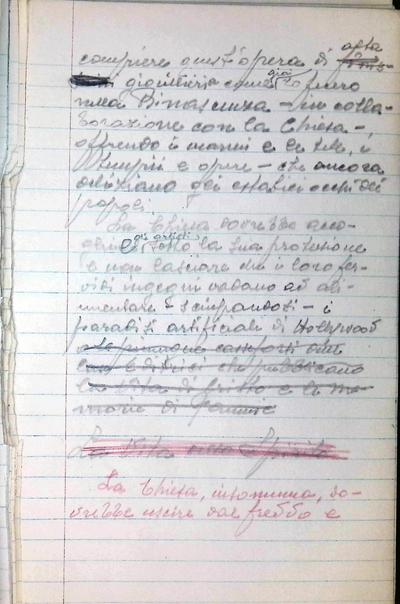
Gli artisti dovrebbero compiere quest'opera di alta gioielleria come già lo fecero nella [Rinascenza?] – in collaborazione con la Chiesa – offrendo i marmi e le tele, i [?] e opere – che ancora [?] occhi dei popoli.
La Chiesa dovrebbe accogliere gli artisti sotto la sua protezione e non lasciare che i loro fervidi ingegni vadano ad alimentare – sciupandosi – i paradisi artificiali di Hollywood [deleted].
[deleted: La vita nello Spirito]
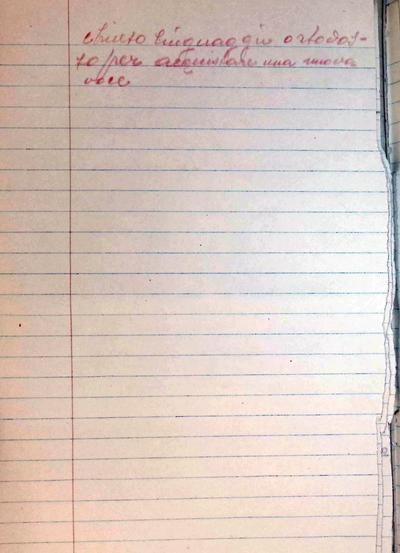
La Chiesa, insomma, dovrebbe uscire dal freddo e chiuso linguaggio ortodosso per acquistare una nuova voce.
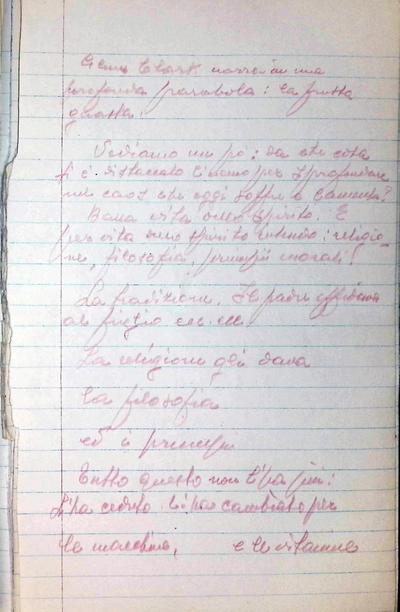
Glenn Clark narra in una profonda parabola: la frutta guasta.
Vediamo un po': da che cosa s'è distaccato l'uomo per sprofondare nel caos che oggi soffre e conosce? Dalla vita dello Spirito. E per vita dello spirito intendo: religione, filosofia, principi morali!
La tradizione. Il padre affidava al figlio ecc. ecc.
La religione gli dava la filosofia ed i principi
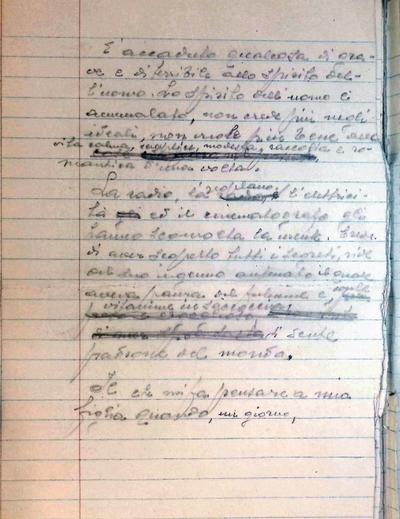
Tutto questo non c'è più: l'ha ceduto. L'ha cambiato per le macchine, e le vitamine È accaduto qualcosa di grave e di terribile allo spirito dell'uomo. Lo spirito dell'uomo è ammalato, non crede più negli ideali, non vuole più bene avere vita calma, [?], modesta, raccolta e romantica d'una volta.
La radio, l'aeroplano, l'elettricità ed il cinematografo gli hanno sconvolto la mente. Crede d'aver scoperto tutti i segreti, ride del suo ingenuo antenato, il quale aveva paura del fulmine e, [?] vitamine in [?] si sente padrone del mondo.
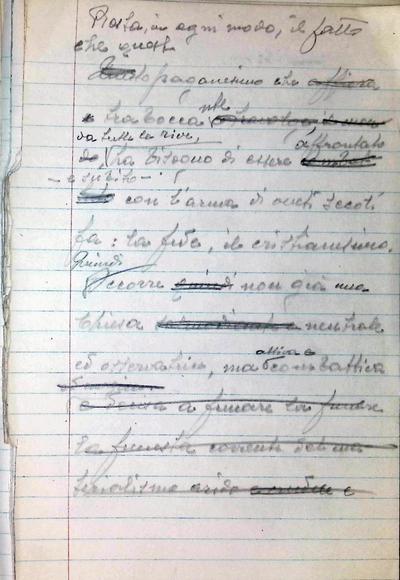
Il che mi fa pensare a mia figlia, quando, un giorno, [?], in ogni modo, il fatto che questo paganesimo che [deleted: affiora] trabocca [deleted] da tutte le rive, ha bisogno di essere affrontato – e subito – con l'arma di venti secoli fa: la fede, il cristianesimo.
Quindi, occorre [deleted] non più una Chiesa [deleted] neutrale ed osservativa, ma attiva e combattiva [deleted].
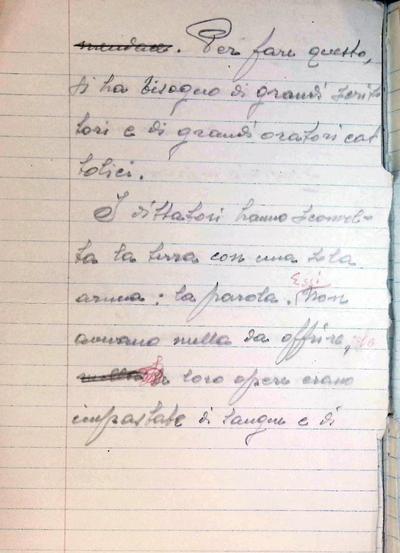
Per fare questo, si ha bisogno di grandi scrittori e di grandi oratori cattolici.
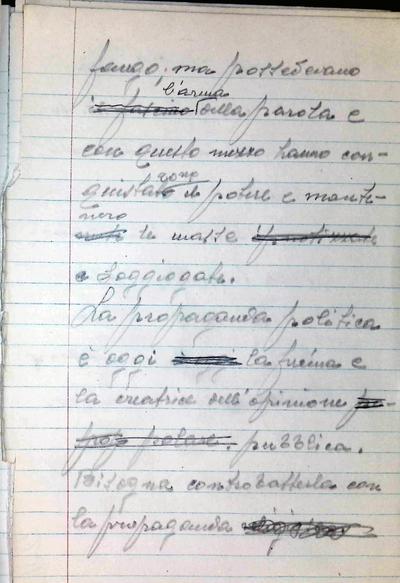
Gli scrittori hanno sconvolto la terra con una sola arma: la parola. Non avevano nulla da offrire, le loro opere erano impastate di sangue e di fango, ma possedevano l'arma della parola e con questo mezzo hanno conquistato il potere e mantenero[no] le masse soggiogate.
La propaganda politica è oggi la fucina e la creatrice dell'opinione pubblica.
Bisogna combatterla con la propaganda [deleted]
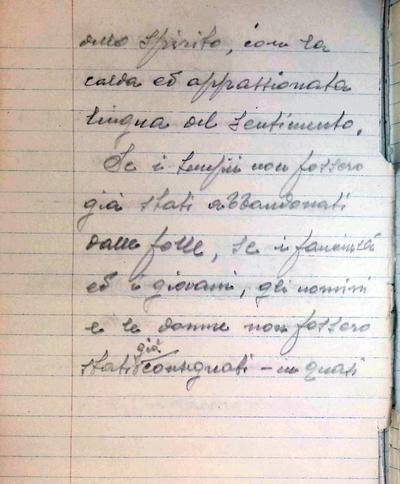
dello Spirito, con la calda ed appassionata lingua del sentimento.
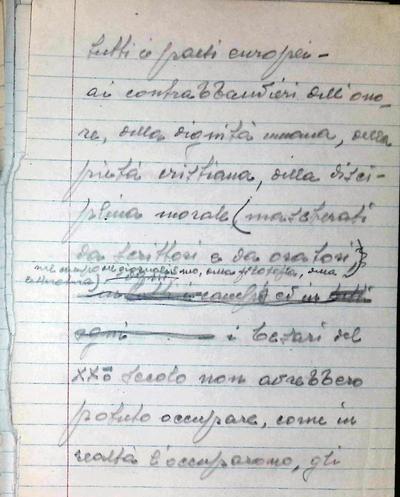
Se i sacrifici non fossero già stati abbandonati dalle folle, se i fanciulli ed i giovani, gli uomini e le donne non fossero stati già [consegnati?] – in quasi tutti i paesi europei – ai contrabbandieri dell’onore, della dignità umana, della pietà cristiana, della disciplina morale (mascherati da scrittori e da oratori nel campo del giornalismo, della filosofia, della letteratura) [deleted]. I cesari del XX° secolo non avrebbero potuto occupare, come in
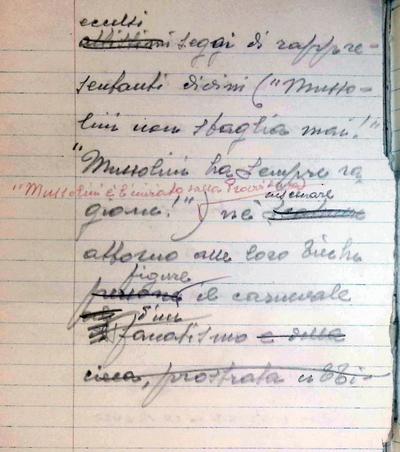
realtà l'occuparono, gli eccelsi seggi di rappresentanti [?] (“Mussolini non sbaglia mai!” “Mussolini ha sempre ragione!” "Mussolini l'inviato della Provvidenza!") né [conservare?] attorno alle loro bieche figure il carnevale d'un fanatismo [deleted: e della cieca, prostrata ubbidienza]
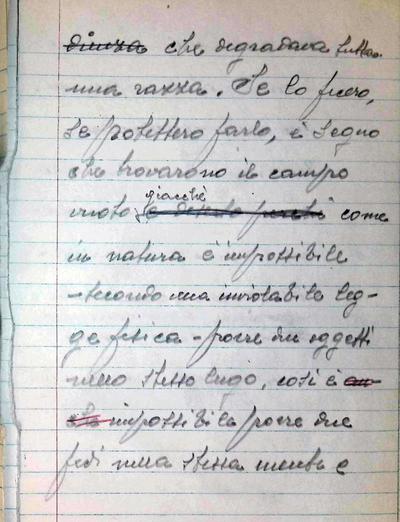
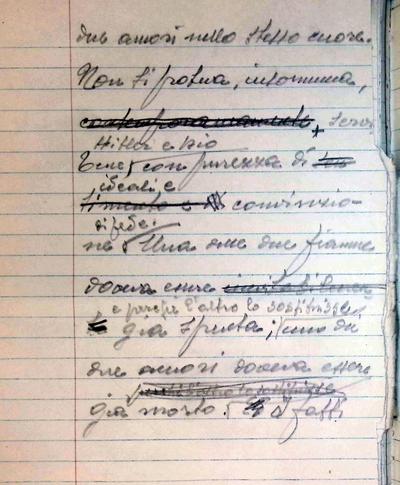
che degradava tutta una razza. Se lo fecero, se potettero [sic] farlo, è segno che trovarono il campo vuoto giacchè [deletede] come in natura è impossibile – secondo una inviolabile legge fisica – porre due oggetti nello stesso luogo, così è [deleted: anche] impossibile porre due fedi nella stessa mente e due amori nello stesso cuore. Non si poteva, insomma, [deleted]
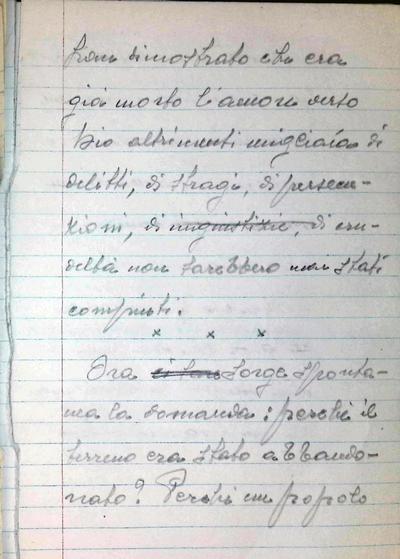
servire Hitler e Dio bene con purezza di ideali, e [deleted] convinzione di fede. Una delle due fiamme doveva essere [deleted] già spenta; e perché l'altro la sostituisse, uno dei due amori doveva essere già morto. I fatti han dimostrato che era già morto l'amore verso Dio, altrimenti migliaia di delitti, di stragi, di persecuzioni, di ingiustizie, di crudeltà non sarebbero mai stati compiuti.
x x x
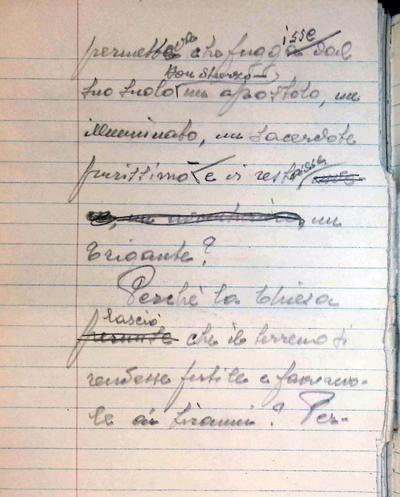
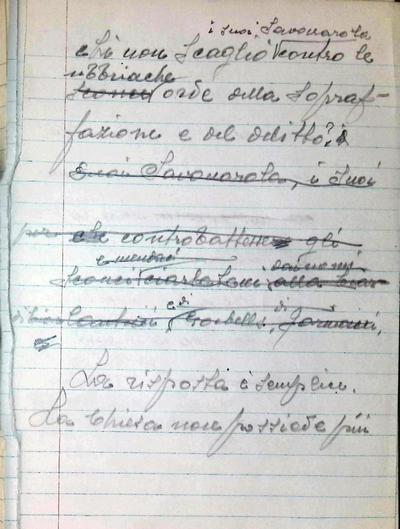
Ora sorge spontanea la domanda: perchè il terreno era stato abbandonato? Perchè un popolo permetteva che fuggisse dal suo ruolo Don Sturzo, un apostolo, un illuminato, un sacerdote purissimo e ci restasse un brigante?
Perché la Chiesa lasciò [deleted: permise] che il terreno si rendesse fertile e favorevole ai tiranni? Perchè e chi non scagliò i suoi Savonarola contro le ubbriache [deleted] orde della sopraffazione e del delitto? [deleted]
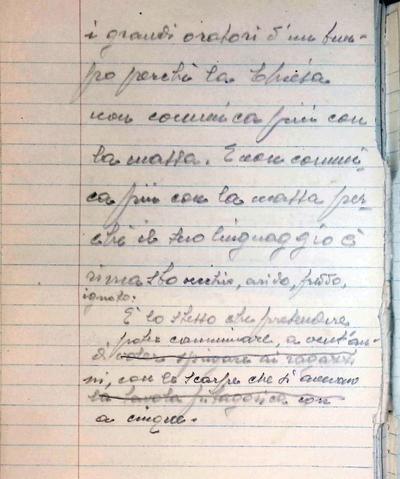
La risposta è semplice. La Chiesa non possiede più i grandi oratori d’un tempo perché la Chiesa non comunica più con la massa. E non comunica più con la massa perché il suo linguaggio è rimasto vecchio, arido, freddo, ignoto:
È lo stesso che pretendere di [deleted] poter camminare, a vent'anni, con le scarpe che si avevano [deleted] a cinque.
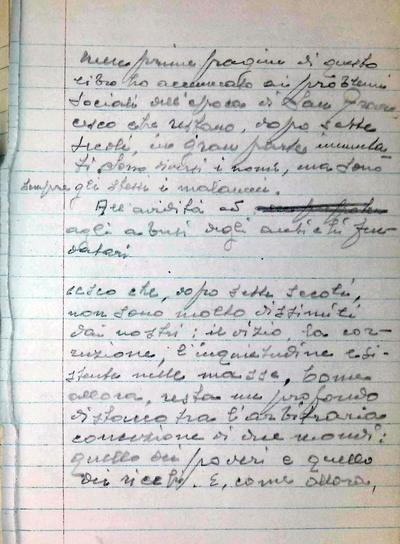
Nelle prime pagine di questo libro ho accennato ai problemi sociali dell'epoca di San Francesco, ed ecco che restano, dopo sette secoli, in gran parte immutati. Sono diversi i nomi, ma sono sempre gli stessi i malanni.
All'avidità, agli abusi, agli [?] e ai feudatari.
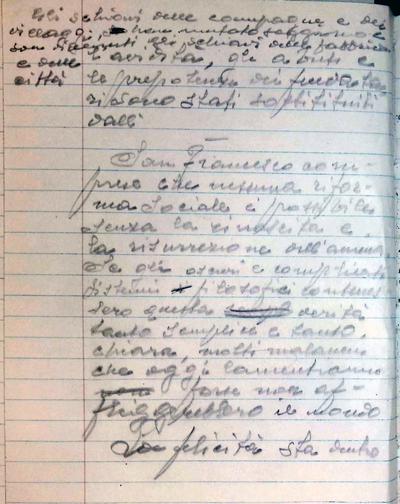
Credo che, dopo sette secoli, non sono molto dissimili dai nostri: il vizio, la corruzione, l'inquietudine esistente nelle masse. Come allora, resta un profondo distacco tra l'arbitraria concezione di due mondi: quello dei poveri e quello dei ricchi. E, come allora, gli schiavi delle campagne e dei villaggi hanno mutato [?] e sono diventati gli schiavi delle fabbriche e delle città. L'avidità, gli abusi e le prepotenze dei feudatari, si sono stati sostituiti [dalle?]
—
San Francesco comprese che nessuna riforma sociale è possibile senza la rinascita e la risurrezione dell'anima.Se gli oscuri e complicati sistemi filosofici contenessero questa [deleted] verità tanto semplice e tanto chiara, molti malanni che oggi lamentiamo forse non affliggerebbero il mondo.
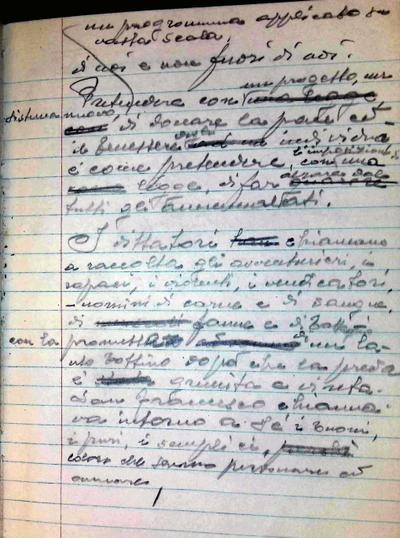
La felicità sta dentro un programma applicato su vasta scala, in noi e non fuori di noi.
Pretendere con un progetto, un sistema nuovo, di donare la pace ed il benessere [?] è come pretendere, con l'imposizione di una legge, di far alzare dal [?] tutti gli ammalati.
I dittatori [deleted] chiamano a raccolta gli avventurieri, i rapaci, i violenti, i vendicatori – uomini di carne e di sangue, di fame e di [=] – con la promessa di un lauto bottino senza che la preda è [?]
San Francesco chiamava intorno a sè i buoni e i puri, i semplici, coloro che sanno perdonare ed [amare?]
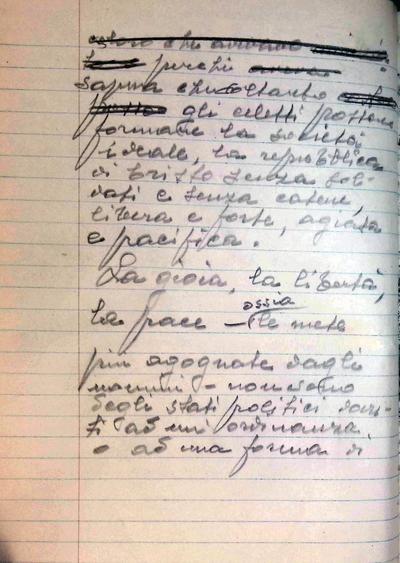
[deleted] perché sapeva che soltanto [deleted] gli eletti possono formare la società ideale, la repubblica di Cristo senza soldati e senza catene, libera e forte, agiata e pacifica.
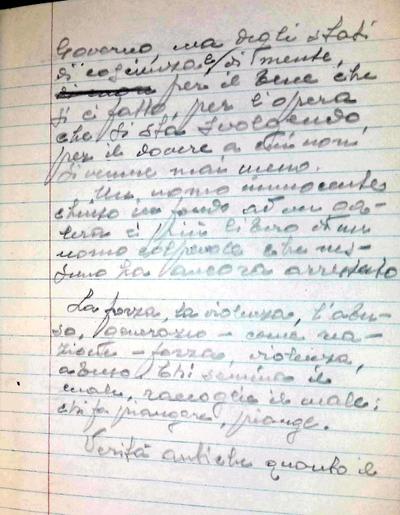
La gioia, la libertà, la pace – ossia le mete più agognate dagli uomini – non sono degli stati prolifici [?] ad un'ordinanza, o ad una forma di Governo, ma degli stati di coscienza e di mente per il bene che si è fatto, per l'opera che si sta svolgendo, per il dovere a cui non si venne mai meno.
Un uomo innocente chiuso in fondo ad un[a] galera è più libero d'un uomo colpevole che nessuno ha ancora arrestato.
La forza, la violenza, l'abuso, l'omicidio – come reazione – [?], violenza, abuso. Chi semina il male, raccoglie il male; chi fa piangere, piange.
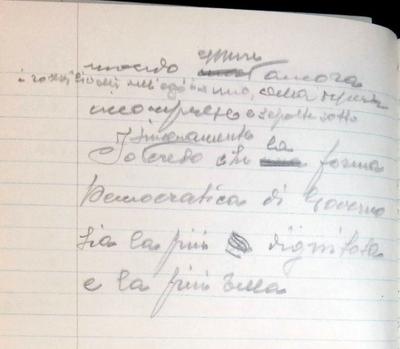
Verità antiche quanto il mondo eppure ancora i rozzi livori dell'egoismo, della [?] incompleto e sepolto sotto
Io interamente credo che la forma democratica di governo sia la più dignitosa e la più bella.
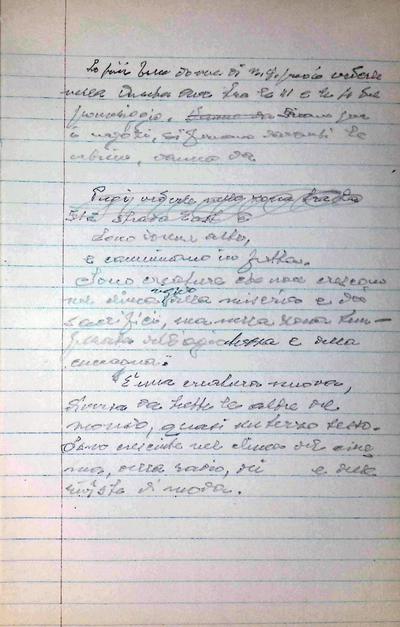
Le più belle donne si [?] nella [?] dove fra le 11 e le 14 del pomeriggio, girano per i negozi, si fermano davanti le vetrine, vanno da
[deleted: Puoi vederle nella ? fra la 51a Strada East e]
Sono donne alte, e camminano in fretta.
Sono creature che non crescono nel [?] rigido della miseria e dei sacrifici, ma nella [?] dell'agio[?] e della eleganza.
È una creatura nuova, diversa da tutte le altre del mondo, quasi un terzo sesso.
Sono cresciute nel [?] del cinema, della radio, dei [...] e delle riviste di moda.
Religion is the secret of how to leave life without dying.
No, I have not expressed myself well. Perhaps it will be clearer to say that it is the secret of remaining in life, but on a higher plane, in a realm that is not [deleted] reached and therefore is not disturbed by the [vexations?], the struggles, the bitter and violent passions of the world. That is why many say, making use of images ancient beyond measure, that religion is a refuge, a fortress. What they mean is this: whoever possesses faith also possesses wings and can fly [deleted] from the anguish and adversity that surround him.
There is a bird which, when the storm draws near, sets off like a [?] the black cloud, spreads its wings, climbs toward the sky, emerges on the other side [deleted] and hovers above the hurricane in a place of calm and light. That is why I call it the Bird of [deleted]
Paradise. It is the same thing. Religion is a flight above the human storm, above the black cloud of the world.
The sun had disappeared behind the mountains, and the shadows were beginning to rise from the graves of the earth.
His voice was as gentle as faith.
[deleted]
The sweetness of being able to find again something that had been lost. To know that it is still ours, still belongs to us.
And twelve beggars slept in peace upon their beds of stone, while the kings and emperors of the earth found no rest in their feather beds.
All my works bear the mark of haste and impatience, and therefore I shall hardly succeed in producing a true work of art, which is always the child of patience, perseverance, and calm. My haste comes from my surroundings, my impatience from my character.
The whole book was written in a single rush, impatiently, with a fever that left me exhausted like
Then I shut it in a [little book?] and kept it hidden, as in Italy all things were kept hidden
A maiden as beautiful as a red rose in a field of lilies.
—
But he was restless and unhappy because he knew the vice of dreaming, which of all vices is the most costly and the most fatal.
—
[Deleted: He died in his immaculate poverty,
They buried him naked in the naked Earth.
But beneath the rough and wretched grave a golden ray of sunlight remained entangled.
It is tomorrow’s sun.]
—
[Deleted: White as altar linen.]
—
But the snow had remained along the road to Voltri, as though some unfortunate miller had lost all his sacks of flour.
Toward dawn, when the white and gentle flocks came out of the warm sheepfolds.
—
The wind passed through the branches of the trees with the rustle of skirts.
—
The wind passed through the treetops with the murmur of a brook.
One of those poor peasants who never tilled the Earth except on feast days, because on all the other days they had to spit into their hands to get a better grip on the hoe.
—
He was troubled and lost, and sorrow followed him as a shadow follows the walking foot.
[Deleted: Autumn had come, and the countryside had
covered itself with a snowfall of leaves that fell scorched and twisted as though by fire.
—
From the shadows of nests hidden in the cracks of the old houses, the owls and legions watched the slow rising of the moon, and then began their
soft and delightful flight to meet the night.]
—
After Golgotha, La Verna was the second Calvary on Earth.
—
[deleted: The [?] shepherds who walk, solitary and melancholy, behind the white wave of the flocks.]
—
Meanwhile other men were arriving at the hermitage of the “penitents of Assisi,” and each dragged behind him a memory, a defeat, a disappointment, a sorrow.
No one can close his hand around the mist, just as no one can hold joy upon your lips. For everything in the world fades and flees.
—
The rising from the impassioned branches that seek the earth’s embrace.
—
Your soul wrapped in a veil of extinguished memories.
—
A mystical light spread all around: the air seemed holy, and the sky a velvet cloth strewn with tremulous, swaying lilies of gold.
—
Silence filled the hut as the flight of a bee fills the chalice of a flower.
The happy friars. The blessed [beggars?]
—
Thomas of Celano, who loves to play with words, says of her: “Admirabilis femina clara vocabulo et virtute”
—
He thought again of the little church of San Damiano when he first arrived there, of the leper, of the trial with his father, of the Sultan of Egypt, of La Verna, where he found his ecstasy and his martyrdom.
He began to commune with Nature; he entered into the life and the world of every creature. He spoke with the ants,
—
This book was written in Italy, in the summer of 1939, on a deserted beach near Rome.
In the Fascist calendar it was Year XVII; [deleted] in the hierarchy of
Caesar’s Madhouse, the director-general was mad.
For two years my life had been unhappy.
Having returned to Italy to rest and see my [deleted] again, I found myself locked up as though in a prison.
The secret police
opened my mail.
Only the things we understand persuade us; and only the things that persuade us please us—that is, become part of our lives.
The Pope may go on speaking Latin if it suits him and if it is indispensable to strict ecclesiastical protocol, but [deleted: the fact] the fact remains unalterable and incontrovertible that, had Hitler spoken Latin too, it would have confined him to the only place he deserved [deleted: where he would have found a fitting companion in misfortune]: the madhouse.
I have said that ours is [deleted] a pagan age, and this proves the deep pessimism that has stricken humanity. Even the Greeks [deleted] though they were proud creators of beauty—were sad because their Olympus, that is, the [?] of their spirit, was closed and circumscribed. And the Romans were sad, too, who
sought to drown their boredom and melancholy in orgies.
Religion alone is a source of optimism and joy for the human soul, because it gives comfort, courage, and hope. Whoever truly possesses it does not doubt, and whoever does not doubt is not sad, because he is strong and sure of himself. [deleted: and whoever is not sad does not grow bored; and whoever does not grow bored does not run after whims, amusements, vanities, and illusions. In short, he harms neither himself nor others.]
Peoples Catholic by tradition, culture, and feeling should return—as Saint Francis did—to the Gospel, to the fresh [deleted] and eternal fountain of the
spirit. To the Gospel, which contains a message forever new and forever beautiful as the sky.
But the Gospel, too, would have to be taken up and explained to the [deleted: scientific, unreadable] minds of the masses, who are no longer simple and docile but scientific and rational, just as modern science has wished them to be.
It must be taken up and freed from the contradictions that strike doubters and increase their doubts; its profound wisdom must be demonstrated—as phenomena are demonstrated; the points that seem obscure must be clarified, and the incandescent, dazzling substance of the parables must be freed from its original garb.
For it would be enough if the
Gospel were understood as one understands a good reading book, and there would be a new humanity beneath the sun.
As matters stand today, very few continue to read the Bible, and so the prophecies of Jacob are passed over for the prophecies of Walter Winchell, while instead of the songs of David—which contain more poetry than all the libraries in the world—the crowd prefers [deleted] Frank Sinatra’s little songs.
***
Artists should
undertake this work of exquisite craftsmanship, as they once did during the [Renaissance?]—in collaboration with the Church—offering marble and canvas, [?] and works—which still [?] the eyes of the peoples.
The Church should take artists under its protection and not allow their fervent gifts to be squandered in feeding the artificial paradises of Hollywood [deleted].
[deleted: Life in the Spirit]
In short, the Church should abandon its cold and
closed orthodox language and acquire a new voice.
Glenn Clark tells a profound parable: the spoiled fruit.
Let us see: what has man severed himself from, to sink into the chaos he suffers and knows today? From the life of the Spirit. And by life of the spirit I mean religion, philosophy, moral principles!
Tradition. The father entrusted to the son, etc., etc.
Religion gave him philosophy and principles
None of this exists anymore: he gave it away. He exchanged it for machines and vitamins
Something grave and terrible has happened to the spirit of man. The spirit of man is ill; it no longer believes in ideals, no longer wishes to cherish the calm, [?], modest, intimate, and romantic life of the past.
The radio, the airplane, electricity, and the cinema have turned his mind upside down. He believes he has discovered every secret; he laughs at his naïve ancestor, who was afraid of lightning, and, [?] vitamins in [?], he feels himself master of the world.
Which makes me think of my daughter, when, one day,
[?], in any event, the fact is that this paganism, which [deleted: rises to the surface] overflows [deleted] every bank, must be confronted—and at once—with the weapon of twenty centuries ago: faith, Christianity.
Therefore, what is needed [deleted] is no longer a Church [deleted] that is neutral and merely observant, but one that is active and combative [deleted].
To accomplish this, we need great Catholic writers and great Catholic orators.
Writers have convulsed the earth with a single weapon: the word. They had nothing to offer; their works were kneaded from blood and
mud, but they possessed the weapon of the word, and by this means they conquered power and kept the masses in subjection.
Political propaganda today is the forge and creator of public opinion.
It must be fought with propaganda [deleted]
of the Spirit, in the warm and passionate language of feeling.
If sacrifice had not already been abandoned by the masses, if children and young people, men and women, had not already been [delivered?]—in almost
every European country—to the smugglers of honor, human dignity, Christian compassion, and moral discipline (disguised as writers and orators in the fields of journalism, philosophy, and literature) [deleted], the Caesars of the twentieth century could never have occupied, as
indeed they did, the
exalted seats of representatives [?] (“Mussolini is never wrong!” “Mussolini is always right!” “Mussolini, the envoy of Providence!”), nor [kept?] around their sinister figures the carnival of a fanaticism [deleted: and of blind, abject obedience]
that degraded an entire race. If they did so, if they were able [sic] to do so, it means they found the field empty, since [deleted] just as in nature it is impossible—according to an inviolable physical law—to place two objects in the same space, so it is [deleted: also] impossible to place two faiths in the same mind and
two loves in the same heart. One could not, in short, [deleted]
serve Hitler and God with purity of ideals and [deleted] conviction of faith. One of the two flames must have [deleted] already gone out; and for the other to take its place, one of the two loves must already have died. The facts
have shown that love of God was already dead, otherwise thousands of crimes, massacres, persecutions, injustices, and cruelties would never have been committed.
x x x
Now the question naturally arises: why had the field been abandoned? Why did a people
allow Don Sturzo—an apostle, an enlightened man, a priest of the purest character—to be driven from his role, while a brigand remained?
Why did the Church allow [deleted: permit] the soil to become fertile and favorable to tyrants? Why
and who failed to hurl its Savonarolas against the drunken [deleted] hordes of oppression and crime? [deleted]
The answer is simple. The Church no longer possesses
the great orators of the past because the Church no longer communicates with the masses. And it no longer communicates with the masses because its language has remained old, arid, cold, unknown:
It is like expecting to [deleted] walk at twenty in the shoes one wore [deleted] at five.
In the opening pages of this book I mentioned the social problems of the age of Saint Francis, and here they remain, after seven centuries, largely unchanged. The names are different, but the evils are still the same.
Greed, abuses, the [?], and the feudal lords.
I believe that, after seven centuries, they are not so very different from ours: the vice, corruption, and unrest that exist among the masses. As then, a profound gulf remains between the arbitrary conception of two worlds: that of the poor and that of the rich. And, as then,
the slaves of the countryside and villages have changed [?] and become the slaves of factories and cities. The greed, abuses, and tyranny of the feudal lords have been replaced [by?]
—
Saint Francis understood that no social reform is possible without the rebirth and resurrection of the soul. If obscure and complicated philosophical systems contained this [deleted] truth, so simple and so clear, many of the evils we lament today might not afflict the world.
Happiness lies within
us and not outside us, within a program applied on a vast scale.
To expect, through a plan or a new system, to bestow peace and prosperity [?] is like expecting, through the imposition of a law, to make all the sick rise from their [?].
Dictators [deleted] rally adventurers, predators, the violent, avengers—men of flesh and blood, of hunger and [=]—with the promise of rich spoils, without the prey being [?]
Saint Francis gathered around him the good and the pure, the simple, those who know how to forgive and [love?]
[deleted] because he knew that only [deleted] the chosen could form the ideal society, the republic of Christ without soldiers and without chains, free and strong, prosperous and peaceful.
Joy, freedom, peace—that is, the goals most ardently desired by men—are not states produced [?] by an ordinance or by a form of
government, but states of conscience and mind arising from the good one has done, the work one is carrying out, the duty one has never failed to fulfill.
An innocent man locked in the depths of a prison is freer than a guilty man whom no one has yet arrested.
Force, violence, abuse, murder—as a reaction—[?], violence, abuse. He who sows evil reaps evil; he who makes others weep, weeps.
Truths as old as the
world, and yet still the crude rancors of selfishness, of [?] incomplete and buried beneath
I wholly believe that the democratic form of government is the most dignified and the most beautiful.
The most beautiful women [?] in the [?], where between eleven and two in the afternoon they roam through the shops, pause before the windows, go from
[deleted: You can see them in the ? between East 51st Street and]
They are tall women, and they walk quickly.
They are creatures who do not grow up in the [?] harshness of poverty and sacrifice, but amid the [?] of comfort [?] and elegance.
They are new creatures, unlike all others in the world, almost a third sex.
They have grown up in the [?] of cinema, radio, [...] and fashion magazines.